

The Android ecosystem is massive. With millions of devices running on Android, the Google Play Store has grown into the premier destination for apps catering to every need imaginable, from productivity tools to games, health trackers, and beyond. But just how many apps are actually available in the Android market today? And what does this gargantuan number mean for users and developers alike?
This blog will explore the size and scale of the Android app market, key trends, and what users and creators need to know about navigating such an expansive ecosystem. We’ll also touch on the implications of app growth for innovation, quality, and app discoverability.
The Evolution of the Android Market
From Humble Beginnings to a Global Powerhouse
When Google Play, formerly known as the Android Market, launched in 2008, it featured only around 50 apps. At the time, Apple’s App Store already had more than ten times that number, occupying an early lead in the app store wars. However, Google’s commitment to open-source software and Android’s accessibility for developers quickly made it the platform of choice for app creators worldwide.
Fast forward to today, Google Play boasts well over 3.5 million applications, as of 2023. This incredible growth can be attributed to Android’s dominant position in the global smartphone market. With over 70% market share, Android devices are accessible to billions of users, making it an attractive platform for developers.
Current Numbers and Metrics of the Google Play Store
How Many Apps Are Available?
According to Statista, the Google Play Store hosted approximately 3.55 million apps as of the first quarter of 2023. This number reflects the sheer scale of the Android ecosystem. For comparison, Apple’s App Store has around 1.8 million apps, making Google Play the largest app marketplace in the world.
The variety of apps is also staggering. Categories such as gaming, education, health, and finance dominate the platform, with gaming apps alone accounting for almost 14% of the total. Educational tools and lifestyle apps also take up significant portions, signaling the store’s appeal to a diverse range of demographics.
Trends in App Growth
Interestingly, while the total number of apps is staggering, the growth rate has started to plateau. Several factors have contributed to this slowdown:
- Quality Over Quantity: Google has doubled down on quality control measures, removing millions of outdated, duplicated, or low-quality apps.
- Developer Prioritization: Developers are increasingly focusing on creating impactful, well-designed apps rather than flooding the market with barely functional products.
- Regulations & Compliance: Stricter app guidelines and compliance expectations, such as data security and user privacy measures, have discouraged poorly developed apps from entering the market.
Even with these measures in place, the Google Play Store remains immense, boasting unparalleled app diversity.
Android Market and Mobile App Market Size Growth
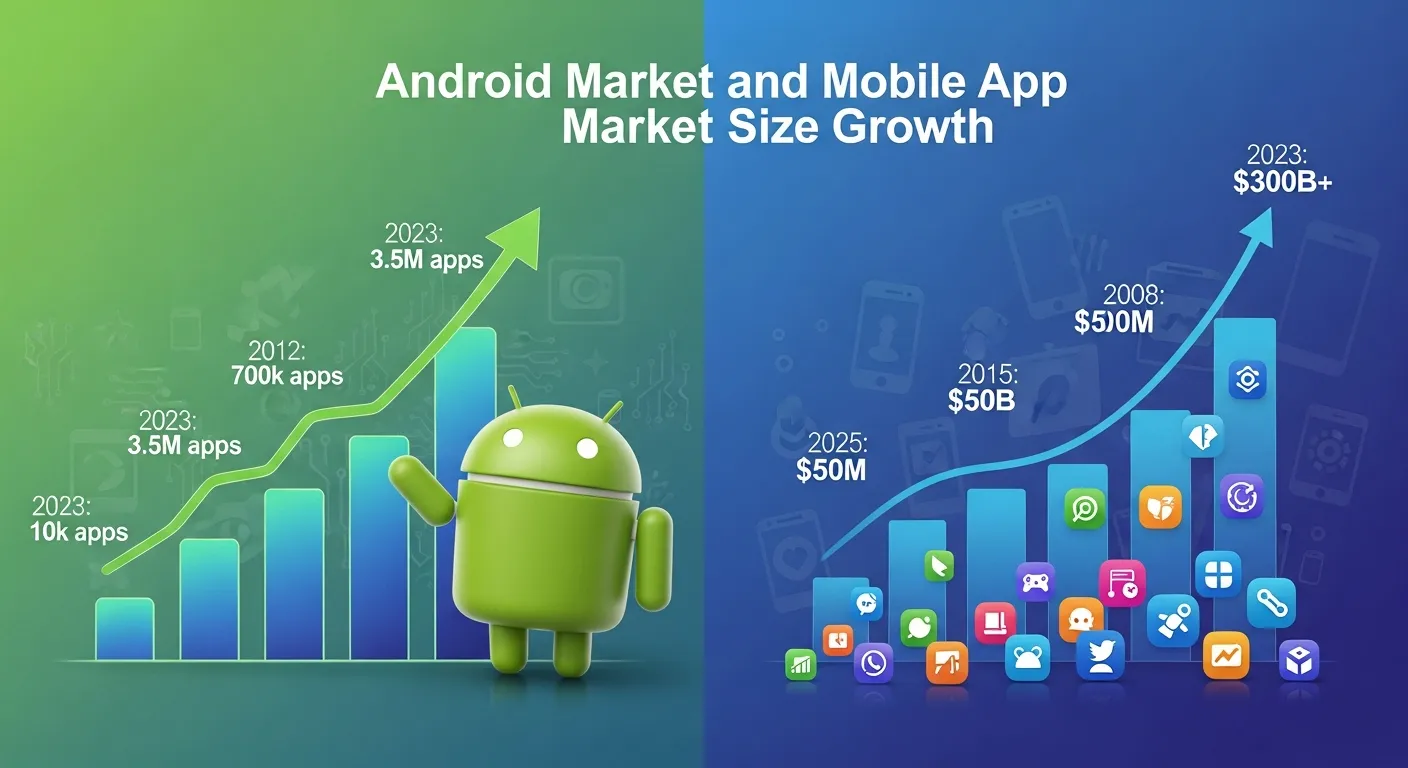
The Android Market plays a central role in the global mobile app market size growth, contributing significantly to worldwide app revenue and digital adoption. With billions of Android users, developers gain access to vast customer bases across emerging and developed regions. This scale accelerates innovation, boosts startup growth, and drives competitive pricing. As mobile commerce, fintech, and health tech continue expanding, Android remains a primary distribution channel. Businesses leverage the Play Store to enter new markets quickly, reduce operational costs, and enhance digital engagement. With strong smartphone penetration and affordable internet access, Android-powered ecosystems are expected to fuel the next phase of global app economy expansion, reinforcing its dominance in mobile-first economies.
Why Does Size Matter for Developers and Users?
For Developers
For developers, the vast size of the Android market offers both opportunities and challenges:
- Opportunities:
- A larger audience equals more potential downloads and revenue.
- Diverse regions mean app localization to serve regional markets.
- Open-source development fosters creativity and cutting-edge innovations, such as AI and AR apps.
- Challenges:
- Fiercely competitive landscape makes discoverability harder.
- Higher chances of app redundancy.
- Evolving user expectations require constant updates for app relevance.
Developers now need to focus on optimizing their apps for performance, user experience, and niche needs to stand out in the crowd.
For Users
For users, the abundance of options can feel both empowering and overwhelming:
- Key Benefits:
- A wide variety of apps ensures that there’s practically an app available for every possible need.
- Healthy competition among developers leads to better quality and innovation.
- Freemium models make several apps accessible for zero upfront cost.
- Challenges:
- Sorting through thousands of apps can be overwhelming.
- Scams and malicious apps remain a concern, despite Google’s rigorous checks.
- Many apps may offer superficial features, necessitating careful selection.
Ultimately, this overabundance makes app selection a paradox of choice for users. Fortunately, Google Play’s recommendation algorithms continually improve to help users find apps better tailored to their needs and preferences.
Finance Mobile App Market Growth on Android
The finance mobile app market has witnessed rapid expansion within the Android ecosystem. Fintech apps for payments, investments, budgeting, and digital banking thrive due to Android’s affordability and accessibility. Millions of users in developing regions rely on Android devices to access financial services, promoting financial inclusion and digital payments adoption. From mobile wallets to stock trading platforms, Android enables scalable financial solutions. With advancements in security, AI-driven fraud detection, and biometric authentication, financial apps are becoming more reliable and trusted. This growth positions Android as a major driver of global fintech adoption, empowering both startups and enterprises to deliver innovative financial solutions to underserved markets.
Android Market Revenue Model & Monetization Strategies
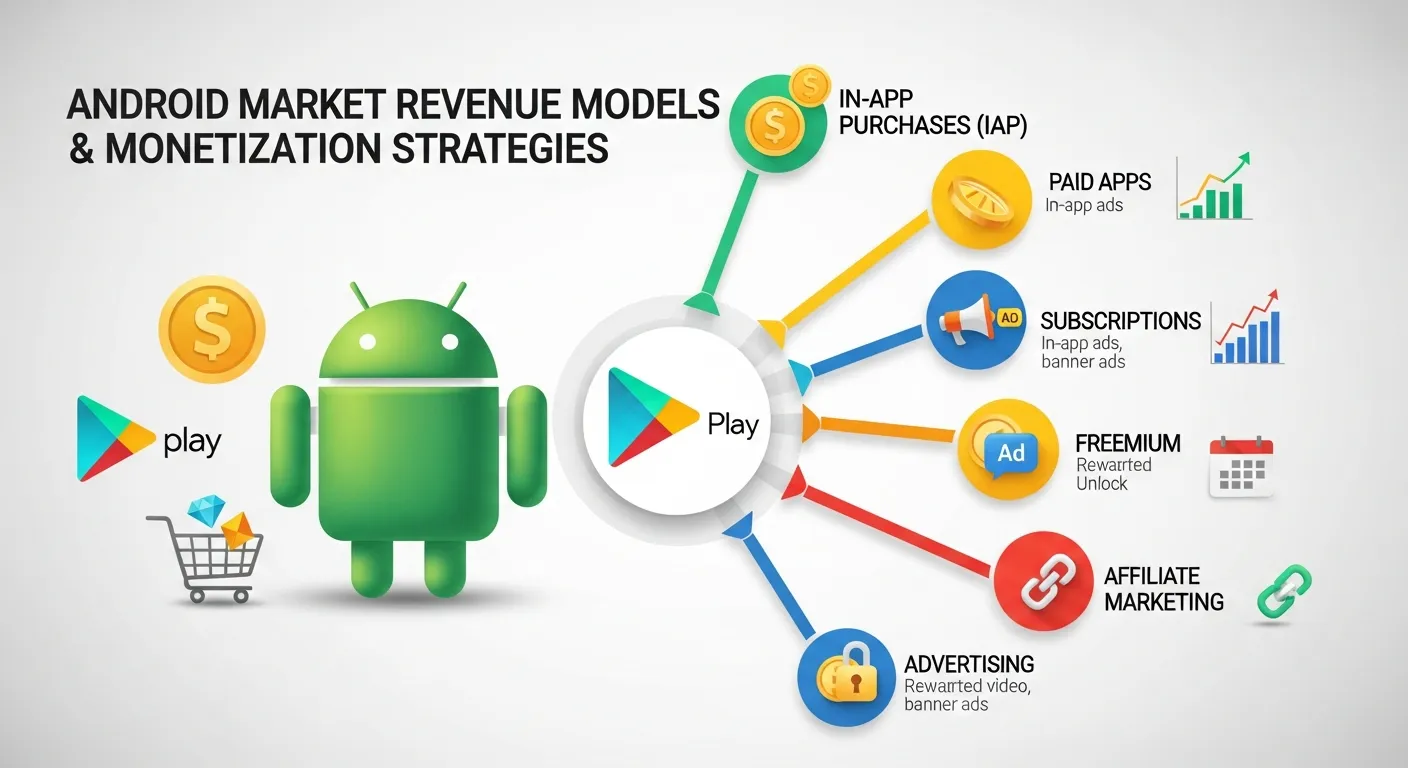
The Android Market supports multiple monetization models that allow developers to generate sustainable revenue. Understanding these models helps businesses choose the most profitable approach while delivering user value.
Key Monetization Methods
- In-app purchases (freemium upgrades, virtual items)
- Subscription-based services
- In-app advertising
- Affiliate partnerships
- Paid app downloads
Benefits of Smart Monetization
- Higher lifetime user value
- Recurring revenue streams
- Better financial forecasting
- Scalability across global markets
Monetization Model Comparison
| Model | Best For | Revenue Potential | User Acceptance |
|---|---|---|---|
| In-App Purchases | Gaming, utilities | Very High | High |
| Subscription | SaaS, fitness, education | High | Medium |
| Advertising | Free apps | Medium | High |
| Paid Apps | Premium tools | Low–Medium | Low |
| Affiliate | Ecommerce apps | Medium | High |
Importance of Marketing for Mobile Apps in Android Market
Effective marketing for mobile apps is crucial for achieving success in the competitive Android Market. With millions of apps available, visibility becomes a major challenge. Developers utilize App Store Optimization (ASO), paid campaigns, influencer partnerships, and content marketing to boost discoverability. Social media ads, video promotions, and referral programs further enhance downloads and user engagement. Data-driven marketing strategies allow developers to optimize acquisition costs while improving retention. As competition intensifies, strategic marketing becomes the backbone of sustainable growth. Brands that invest in comprehensive marketing frameworks gain stronger positioning, increased brand recall, and higher lifetime user value across global markets.
Android Market vs Apple App Store – Market Comparison
Comparing the Android Market with the Apple App Store provides valuable insight into global mobile ecosystem trends and opportunities.
Key Differences
- Android dominates global device market share
- Apple leads in user spending per app
- Android offers broader emerging market reach
- Apple delivers higher monetization per user
Platform Comparison
| Feature | Android Market | Apple App Store |
|---|---|---|
| Total Apps | 3.5M+ | 1.8M+ |
| Market Share | 70%+ | 29% |
| User Base | Global | Premium |
| Monetization | Medium | High |
| Emerging Markets | Strong | Limited |
Role of Mobile Market App Store in Global Business Expansion

The mobile market app store, particularly the Android Market, enables businesses to expand globally with minimal infrastructure investment. Companies can distribute apps worldwide instantly, reaching billions of potential customers. Localization tools, regional targeting, and multilingual support enhance market penetration. Android allows enterprises to test new products, scale operations, and adapt strategies quickly. From startups to multinational corporations, organizations leverage the Play Store to grow revenue streams, increase customer engagement, and build global brand recognition. This accessibility and scalability make Android a powerful platform for digital transformation and business expansion across industries.
How Google Is Improving the Android App Ecosystem
Google is consistently refining the Play Store to make the platform more beneficial for both users and developers. Key initiatives include:
- AI-Powered Recommendations:
Google’s machine learning algorithms analyze user behavior to deliver personalized app recommendations. Whether you’re looking for a new fitness tracker or a productivity app, Google Play ensures relevant suggestions are placed front and center.
2. Stronger App Vetting:
By introducing stricter policies for data usage, permissions, and content moderation, Google ensures the removal of apps that violate user privacy or compromise device security.
3. Play Pass:
A subscription-based model allowing users to access premium apps and games without ads has incentivized both users and developers to focus on quality content.
4. Regionalized Curation:
To accommodate its extensive global base, the Play Store increasingly highlights apps relevant to regional preferences and languages, boosting accessibility.
What’s Next for the Android Market?
The future of the Android Market is poised to be shaped by innovation and user needs:
- AI-Driven Apps:
Expect more AI-based tools, whether it’s productivity assistants or creative platforms, to dominate the app space.
- Health and Wellness:
With a growing focus on mental and physical well-being, apps related to meditation, fitness, and self-help are likely to continue growing.
- Sustainability:
Green apps designed to reduce carbon footprints or promote sustainable lifestyles are quickly gaining traction.
- Affordable Innovations for Developing Markets:
Since Android dominates in developing countries, apps catering to affordability and regional contexts will see increased demand.
Impact of Android Market on Global Digital Economy
The Android Market plays a critical role in shaping the global digital economy. By enabling startups, enterprises, and individual developers to distribute apps worldwide, it drives innovation, employment, and economic growth. Millions of developers generate income through mobile apps, while businesses use Android platforms to reach customers more efficiently.
Moreover, the Android ecosystem supports digital transformation in emerging economies by enabling access to education, finance, healthcare, and e-commerce. Low-cost Android devices combined with affordable mobile internet create opportunities for millions to enter the digital economy. As smartphone adoption rises, the Android Market continues to fuel global productivity, technological advancement, and financial inclusion across industries and regions.
Role of Marketing in Android App Growth
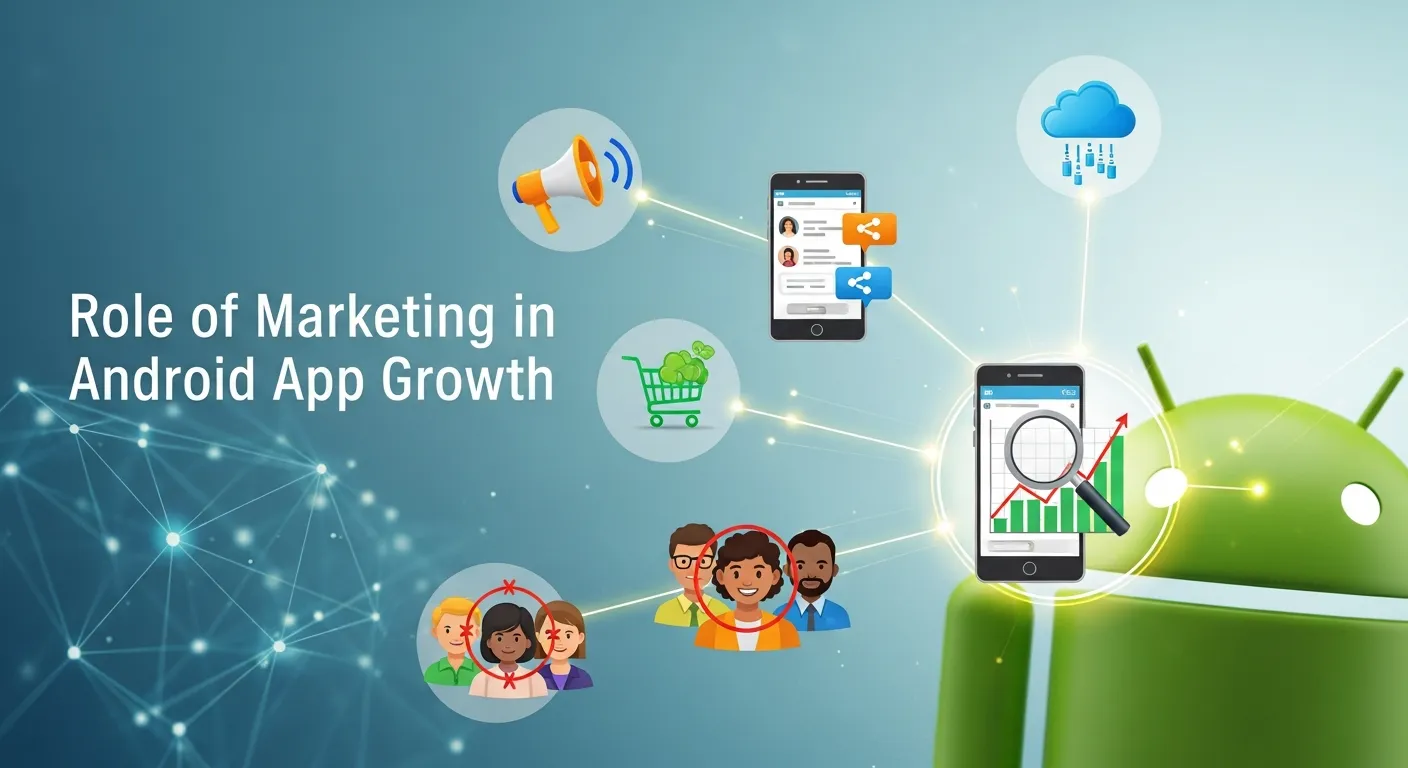
Effective marketing for mobile apps is essential for success in the competitive Android Market. App Store Optimization (ASO), paid advertising, influencer marketing, and content promotion help improve app visibility and user acquisition.
Developers use keyword optimization, compelling visuals, and strong descriptions to increase organic installs. Meanwhile, social media campaigns, video ads, and referral programs accelerate growth. Performance tracking through analytics tools allows continuous improvement. By combining organic and paid strategies, businesses can maximize ROI and boost long-term engagement. As competition increases, smart mobile marketing becomes the key differentiator between successful apps and those that struggle to gain traction.
Future Growth Potential of the Android Market
The future of the Android Market looks extremely promising due to AI innovation, 5G deployment, and global smartphone expansion. Emerging technologies will enhance app performance, personalization, and automation.
Developing regions are expected to drive the next wave of growth, as affordable devices and expanding internet access increase smartphone adoption. Industries like fintech, healthcare, education, and entertainment will experience rapid expansion. Additionally, the rise of super apps and cross-platform development will reshape how users interact with mobile services. With continuous innovation and evolving user needs, the Android Market will remain a powerful engine for digital growth and business opportunities worldwide.
Final Thoughts on the Android App Market’s Scale
With over 3.5 million apps and counting, the Android Market showcases extraordinary diversity and innovation. While these numbers are undeniably impressive, their true power lies in what they ultimately deliver to users and developers alike. For businesses aiming to reach global audiences or for individuals looking to solve daily problems, the Play Store is unrivaled in its offerings.
To fully leverage the Play Store’s immense catalog, both users and app creators must remain informed, vigilant, and discerning. By focusing on quality, relevance, and market trends, you can unlock the vast potential of Android’s ecosystem.
How Data Analytics Shapes Growth in the Android Market
Data analytics plays a crucial role in optimizing performance across the Android Market. Developers track key metrics such as user acquisition, retention rates, churn, session duration, and monetization performance. These insights help improve app design, marketing strategies, and overall user experience. Predictive analytics enables businesses to forecast trends, optimize campaigns, and enhance personalization. By leveraging AI-powered insights, developers can continuously refine features and drive engagement. As competition rises, data-driven decision-making becomes essential for sustained success. Analytics not only improves profitability but also ensures long-term growth within the dynamic Android ecosystem.
Frequently Asked Questions (FAQs)
1. How many apps are currently available in the Android Market?
There are over 3.5 million apps available on the Google Play Store globally.
2. Why is the Android Market so large?
Due to open development policies, global reach, and massive smartphone adoption.
3. Which app category dominates Android?
Gaming apps dominate downloads and revenue.
4. Is Android better than iOS for developers?
Android offers wider reach, while iOS offers higher revenue per user.
5. How does ASO help Android apps grow?
ASO improves search ranking, visibility, and organic downloads.
6. Which regions show fastest Android growth?
Asia-Pacific, Africa, and Latin America.
7. What monetization model works best?
Subscriptions and in-app purchases deliver the highest revenue.
8. How competitive is the Android Market?
Extremely competitive with millions of apps.
9. Is Android good for startups?
Yes, due to low entry cost and massive audience reach.
10. What is the future of the Android Market?
AI-driven apps, fintech, health, and super apps will dominate.