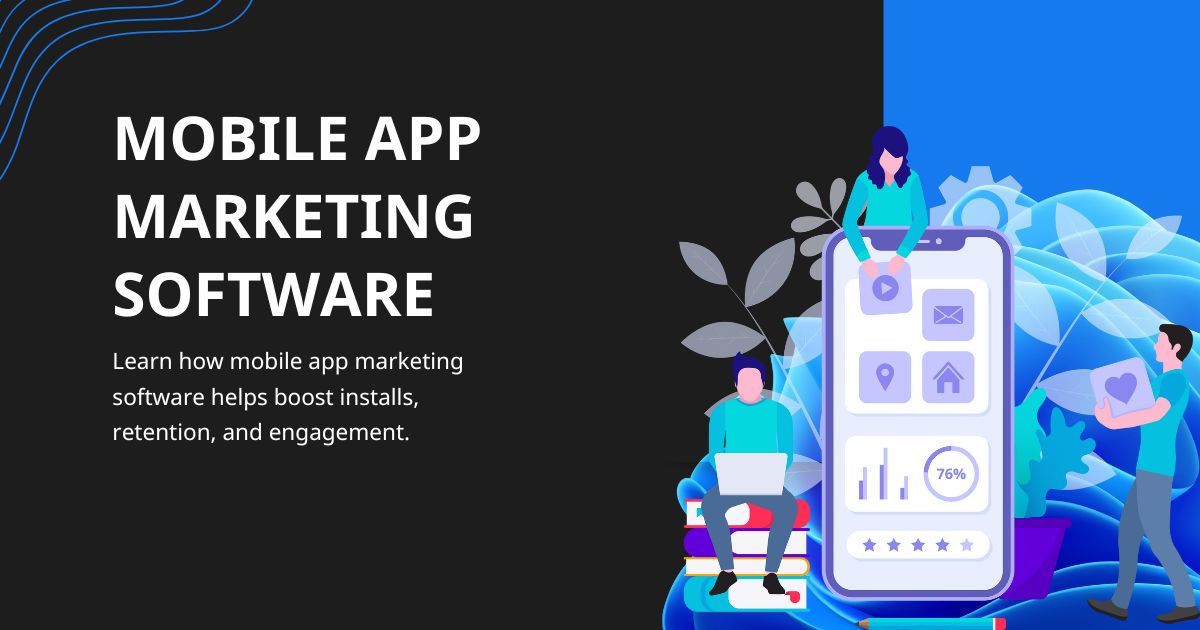
Having a stunning mobile app is only half the battle. The real challenge is getting the user to install it. Mobile App Marketing Software: Your Secret Weapon!
Mobile application marketing software is the secret weapon for ensuring installations, enhancing engagement capacity and nurturing long-term loyalty. Even better, it is highly efficient for bringing new users who could become loyal customers to your company or reinventing dormant ones into active participants. There is nothing like a well-aimed mobile app for user-oriented marketing solutions! If you’ve heard the term before but you’re not entirely sure where to start or what tools are right for your strategy, this is the place. This guide will show you everything about mobile app marketing software- what it does, how it operates, and why installation is so important.
What Is Mobile App Marketing Software?
Mobile app ad software is a collection of help app developers and businesses to promote their apps effectively. These tools do vital marketing procedures such as acquisition of new users, user retention, user engagement and analysis. They allow marketers to tailor campaigns based on user actions. It also makes it possible for them to analyze user behavior and improve the customer experience.
As a gaming platform, e-commerce solution or productivity tool, whatever the nature of your app is, the mobile app marketing platforms provide both the insight and capabilities necessary to succeed in today’s competitive app ecosystem. Learn more: Mobile App Marketing Explained: A Beginner’s Guide
Why Is It Important?
There are over 2.87 million apps in the Google Play Store and 1.96 million in Apple’s App Store. Getting noticed is more than a great app idea; it is a sound marketing plan. Mobile app marketing tools set the foundation for that plan by offering data-driven solutions for growing and maintaining your user base.
Benefits of Using Mobile App Marketing Software

1. Streamlined Campaign Management
With mobile app marketing software, you can manage campaigns across multiple channels from a single platform. This removes the complexity of juggling separate tools for email campaigns, paid ads, social media, and push notifications.
2. Enhanced User Targeting
One of the most powerful features of these tools is their ability to segment users based on demographics, behavior, and preferences. This enables marketers to deliver personalized campaigns, improving relevance and boosting conversion rates.
3. User Behavior Insights
Understanding how your users interact with your app is critical. Most marketing platforms have analytics capabilities that track key performance metrics (KPIs), such as user retention, session duration, and in-app purchases. These metrics render you capable of continually optimizing your approach for improved performance.
4. Boosted Engagement and Retention
Effective marketing software offers solutions like automated push notifications, in-app messages, and email re-engagement campaigns to keep users engaged. Features like gamification or loyalty programs can further encourage repeat usage.
5. Cost Efficiency
By consolidating multiple functions into one platform, mobile app marketing software can save you money. You no longer need to invest in standalone tools or waste ad spend on users who aren’t your target audience.
Core Features to Look For
Not all mobile app marketing platforms are created equal. Here are key features to prioritize:
1. Multi-Channel Campaign Tools
Look for software that allows you to market across multiple touchpoints, including social media ads, search engines, email, and in-app messaging. Ideally, the tool should enable seamless marketing across both Android and iOS ecosystems.
2. Analytics and Reporting
Data-driven decisions are key to success. Choose a platform with robust analytics such as user segmentation, cohort analysis, and campaign performance metrics. Real-time reporting capabilities are also crucial for on-the-fly optimizations.
3. Push Notification Automation
Push notifications are one of the most effective ways to re-engage your audience, but they must be done carefully to avoid annoying users. Make sure the software supports automated, personalized notifications based on user behavior.
4. A/B Testing Capabilities
Want to find out what headline drives user installs or which notification timing gets the highest open rates? A/B testing features allow you to experiment with different variables for optimized campaigns.
5. App Store Optimization (ASO) Tools
ASO is vital for organic discovery. Some platforms include keyword tracking and competitor analysis tools to help your app rank higher in app store search results.
6. CRM Integration
User relationships matter. Integrating your marketing software with your CRM allows for a holistic view of your customer base, enabling hyper-personalized marketing.
Top Mobile App Marketing Software Options

Here’s a snapshot of a few top-tier platforms that can give your app the marketing edge:
1. AppsFlyer
A leader in mobile attribution and analytics, AppsFlyer provides advanced tools for tracking campaign performance and understanding user behavior. It integrates seamlessly with ad networks and offers deep insights for ROI-driven decisions.
2. Braze
Braze specializes in engagement. With features like automated campaigns, personalized messaging, and rich push notifications, Braze ensures you can maintain meaningful interactions with your user base.
3. Adjust
Adjust focuses on mobile app attribution and fraud prevention. It offers powerful data visualization tools to measure campaign performance while ensuring your budget is not wasted on fraudulent activity.
4. Montage
Montage is perfect for engagement and retention strategies. It combines analytics, segmentation, and multi-channel campaign management, with a focus on personalization.
5. Clever Tap
Clever Tap combines real-time analytics with mobile engagement tools like push notifications, in-app messaging, and personalized campaigns. It’s a great pick for apps aiming to maximize user lifetime value (LTV).
6. SanMo BD
SanMo BD offers a full suite of mobile marketing services tailored for app growth. From user acquisition strategies to in-depth analytics and multi-channel automation, SanMo BD specializes in personalized campaign management and local-market targeting, making it ideal for brands seeking to stand out in competitive landscapes.
The Role of Mobile App Marketing Software in User Acquisition
In today’s competitive app ecosystem, having a brilliant app alone isn’t enough. Mobile app marketing software plays a crucial role in user acquisition by identifying the right audience, optimizing campaigns, and ensuring your app reaches users who are most likely to engage. These tools leverage advanced analytics to understand where potential users are, what motivates them to download an app, and how to retain their attention beyond the first interaction. By integrating mobile app marketing strategies, businesses can effectively convert prospects into loyal users, boosting app installs while minimizing wasted ad spend. This ensures that every marketing dollar contributes to sustainable growth, allowing companies to scale their user base efficiently.
Enhancing Engagement Through Smart Campaigns
Once users download an app, the next challenge is keeping them engaged. Mobile app marketing software enables businesses to deliver personalized experiences tailored to individual behavior, preferences, and past interactions. Through automated campaigns, push notifications, and in-app messaging, companies can maintain a consistent connection with their users. Incorporating mobile app retargeting strategies allows marketers to re-engage users who have become inactive, ensuring they return to the app and continue interacting with its features. Engagement-driven campaigns not only improve retention rates but also build a strong emotional connection between the user and the brand. Over time, this loyalty translates into higher lifetime value, making engagement a key component of a successful mobile app marketing strategy.
Driving Growth with Analytics and Insights

A powerful advantage of mobile app marketing software is its ability to provide actionable insights. Every user interaction generates data that can be analyzed to optimize campaigns, improve user experiences, and identify opportunities for growth. By monitoring metrics such as session duration, retention rates, and in-app purchases, marketers gain a deep understanding of user behavior. This data-driven approach allows businesses to refine their mobile app marketing strategies continuously, ensuring that each update, notification, or campaign is aligned with the user’s needs. Furthermore, predictive analytics can forecast trends and user behaviors, empowering businesses to proactively create campaigns that resonate with their audience, ultimately powering mobile app growth in a sustainable way.
Leveraging Referral Programs for Organic Expansion
Mobile app referral programs are a proven method to accelerate organic growth. By encouraging users to invite friends and colleagues, businesses can expand their audience without relying solely on paid campaigns. Mobile app marketing software streamlines this process by tracking referrals, automating reward distribution, and measuring the success of referral campaigns. These programs create a viral loop where engaged users become advocates for the app, attracting new downloads and enhancing the app’s credibility. When integrated with broader mobile app marketing strategies, referral programs not only increase installs but also drive higher engagement, as referred users are often more likely to be active and loyal. This approach is a cost-effective way to grow the app while simultaneously improving the overall user experience.
Future Trends in Mobile App Marketing Software
The landscape of mobile app marketing software continues to evolve, with new features and innovations shaping the way businesses connect with users. Artificial intelligence and machine learning are increasingly being integrated to provide predictive insights, personalized messaging, and automated optimizations. Voice-enabled interactions, augmented reality experiences, and hyper-personalized content are becoming part of the mobile app marketing strategies that define the next generation of user engagement. Additionally, privacy-conscious tools ensure that user data is handled ethically while still delivering actionable insights. By adopting these advanced solutions, businesses can stay ahead of competitors, anticipate user needs, and continuously enhance the effectiveness of their marketing efforts, ensuring long-term growth and retention.
Advanced Mobile App Marketing Strategies
Marketing an app goes beyond basic campaigns. Here’s how to take it further:
Key Strategies:
- Mobile App Retargeting Strategies: Re-engage inactive users with personalized notifications or offers.
- Referral Programs: Encourage users to invite friends and reward them for successful installs.
- Segmentation-Based Campaigns: Target users based on demographics, preferences, and in-app behavior.
- Push Notification Automation: Automate personalized messages to maximize engagement without spamming users.
Implementation Table:
| Strategy | Purpose | Best Practice Example |
|---|---|---|
| Retargeting | Re-engage dormant users | Send personalized offers after inactivity of 7 days |
| Referral Programs | Boost organic installs | Offer points or rewards for each new signup |
| Segmentation-Based Campaigns | Improve relevance and conversion | Separate campaigns for high-value vs. casual users |
| Push Notification Automation | Maintain consistent engagement | Schedule notifications based on time zones |
Paragraph:
Advanced strategies help apps not only attract new users but also keep existing ones active. By combining retargeting, referral programs, and segmentation, your campaigns become highly targeted, boosting ROI while powering mobile app growth efficiently.
Choosing the Right Mobile App Marketing Software
Selecting the ideal platform is critical to your success. Not every software is equally effective.
Key Considerations:
- Integration Capabilities: Ensure compatibility with your CRM, analytics, and ad platforms.
- Scalability: The software should grow as your user base expands.
- User Experience Insights: Look for platforms providing real-time data on user behavior.
- Budget Efficiency: Evaluate pricing based on features, not just initial cost.
Comparison Table of Top Platforms:
| Software | Best For | Key Features | Pricing Model |
|---|---|---|---|
| AppsFlyer | Attribution & analytics | Campaign tracking, ROI analysis | Subscription-based |
| Braze | User engagement | Automated campaigns, personalized messaging | Tiered pricing |
| Adjust | Fraud prevention & analytics | Fraud detection, KPI dashboards | Custom enterprise |
| Montage | Personalization & retention | Segmentation, multi-channel management | Subscription-based |
| Clever Tap | LTV maximization | Real-time analytics, push notifications | Tiered pricing |
| SanMo BD | Local market targeting | User acquisition, multi-channel automation | Customized plan |
Paragraph:
Choosing the right mobile app marketing software ensures your campaigns are efficient, data-driven, and scalable. Evaluate features, integration options, and pricing to find the platform that aligns with your business goals. The right software makes mobile app marketing strategies effective and sustainable.
Best Practices for Mobile App Marketing Software Usage

Kickstart with a Strong Onboarding Plan
First impressions matter. Use your software’s capabilities to create an onboarding sequence that familiarizes users with the app, offers value right away, and encourages regular use.
Use Personalization to Your Advantage
Leverage user data to make campaigns highly specific. For instance, send personalized recommendations or notifications based on users’ previous activity within the app.
Track and Evolve
Continuously monitor KPIs such as churn rate, daily active users (DAU), and retention rate. Look for patterns in your analytics to understand what works and refine your marketing strategies accordingly.
Optimize for App Stores
Regularly update your app title, description, keywords, and visuals in both the Google Play Store and Apple App Store. Use insights from ASO tools to stay ahead of competitors.
Focus on Engagement
Retention is just as important as acquisition, if not more so. Schedule campaigns like weekly push notifications or email newsletters filled with helpful tips, updates, or exclusive offers.
Drive More Installs with the Right Tools
Mobile app marketing software is not just a tool but also an enabler of strategy. With the right platform, you can make data-driven decisions, engage with your users, and ultimately grow your app’s success.
Choose a platform that aligns with your business goals and start to explore ways of pushing your app to the next level. With all these platforms to choose from, it becomes a herculean task, but prioritizing such features as multi-channel marketing, analytics, and personalization will help you make the optimal choice.
Frequently Asked Questions (FAQs)
1. What is mobile app marketing software?
Mobile app marketing software is a comprehensive toolset that helps businesses acquire new users, retain existing ones, and optimize campaigns using data-driven insights to maximize app growth and engagement.
2. Why is mobile app marketing software important?
It is crucial for increasing app visibility, improving user engagement, and streamlining user acquisition efforts, allowing marketers to track behavior, personalize campaigns, and achieve better ROI efficiently.
3. Can small businesses benefit from it?
Absolutely. Small businesses and startups can leverage mobile app marketing software to run cost-effective campaigns, target the right audience, and grow their app’s user base without requiring large marketing budgets.
4. Does it support multiple platforms?
Most modern marketing software supports both Android and iOS platforms, allowing businesses to run seamless campaigns across app stores, web channels, and digital touchpoints for maximum reach and consistency.
5. What features should I prioritize?
Prioritize features like multi-channel campaign management, automated push notifications, in-depth analytics, A/B testing, ASO tools, and CRM integration to optimize campaigns, drive engagement, and retain loyal users effectively.
6. How does it improve user retention?
By sending automated, personalized push notifications, in-app messages, loyalty rewards, and behavioral recommendations, mobile app marketing software keeps users engaged, encourages repeat usage, and reduces churn over time.
7. Is it suitable for e-commerce apps?
Yes. E-commerce apps benefit from tracking user behavior, sending personalized promotions, automating cart reminders, and using analytics to improve conversion rates and long-term customer retention.
8. How can analytics help my campaigns?
Analytics provide valuable insights into user behavior, campaign performance, and KPIs, enabling marketers to segment users, identify trends, optimize campaigns, and make data-driven decisions for better ROI.
9. Can it reduce marketing costs?
Yes. By consolidating multiple marketing tools into a single platform, businesses save money on separate services, avoid wasted ad spend on irrelevant users, and improve overall campaign efficiency.
10. What is mobile app referral program integration?
Referral program integration allows users to invite friends or colleagues, offering rewards for successful referrals. This boosts organic installs, encourages user engagement, and increases the lifetime value of your app users.