Since app stores offer millions of apps today, the mobile app market has never been more competitive. To attract users amidst all this traffic can appear like an uphill fight. So it is that people turned to social media marketing. Platforms such as Instagram, TikTok, and LinkedIn now boast billions of daily users. Social media gives your app or game a real chance of getting downloaded and then well used; it also means that you can build up a brand profile there.
The Importance of Social Media Marketing for Mobile Apps
Social media platforms are not just places to engage in private chat anymore. Now they are giant ecosystems in which users find, discuss with each other, and deal. Tha,t of course, includes mobile apps such as the one you manage. As the article Why Are In-App Ads Important to Marketers shows, social media marketing is now a must-have for any successful mobile app:
Vast Reach
Rather than millions, social media platforms are home to billions of users. For instance, Facebook alone has more than 2.9 billion monthly active users as of the third quarter this year. Because of this, you will find few other places where any (free) publicity is quite so fertile ground for your app!
Targeted Advertising
Instagram and TikTok both allow for extremely targeted ad display, right down to user interests, search requests and demographics.
Engagement Opportunities
Social media affords the chance to communicate directly with consumers, find out what they’re thinking as well as build a solid user community around your app.
Cost Effective
Compared to conventional marketing methods, social media offers a very inexpensive way to increase downloads and promote your app name.
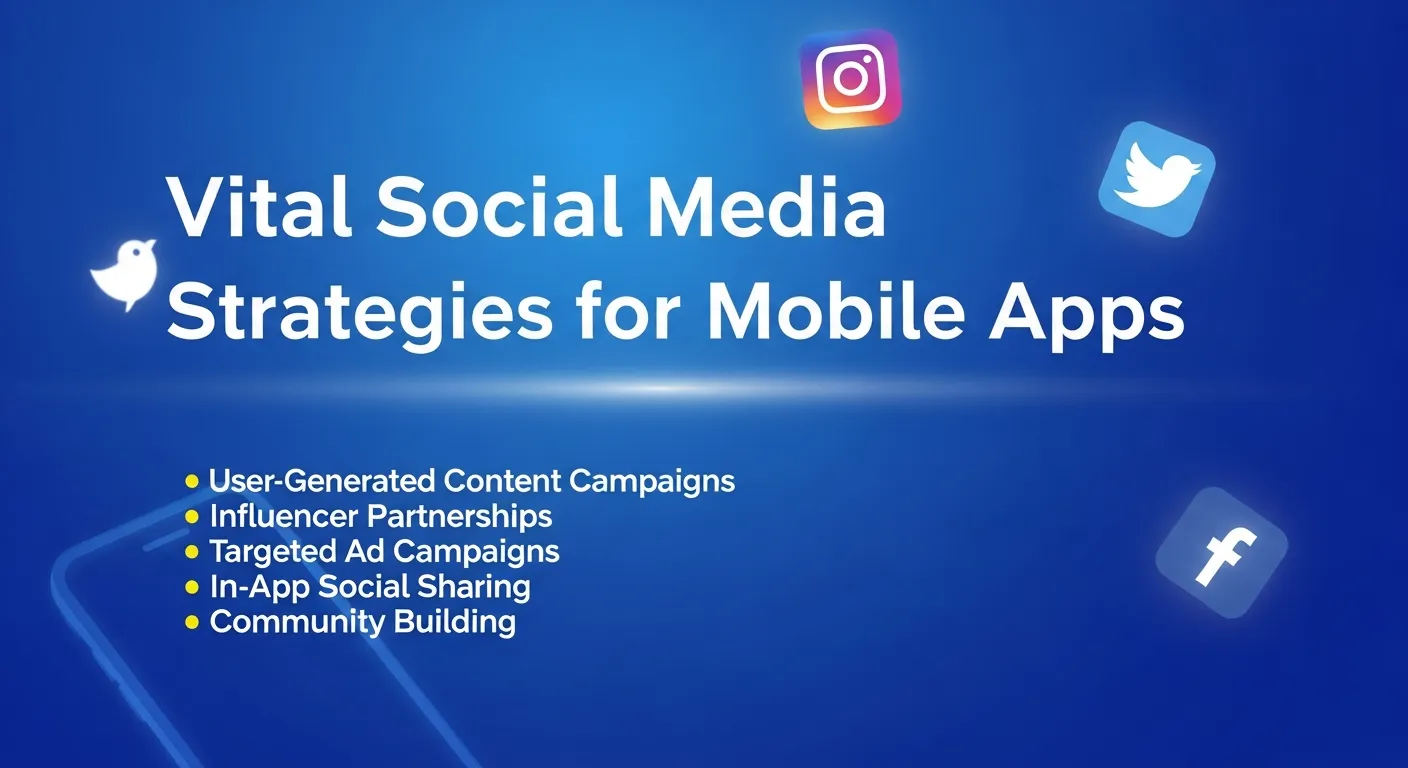
Vital Social Media Strategies for Mobile Apps
Outline Clear Goals and Objectives
Before implementing any strategy for social media, it is worth taking stock of your situation. Different types of apps may well have different objectives in mind:
- Getting their apps installed.
- Informing users of new features
- Building up your user community
- Becoming a trusted voice in one’s industry.
Let’s Walk Through These Goals first in order to help determine what kind of content you should be creating, and taking into consideration whether or not it’s successful.
Know Thy Reader
The user base of your app is specific, so it is necessary to be appealing in every detail of your Social Media. We simply ask this:
- Who are your core users? (e.g., age, gender, hobbies, geography)
- What This App Does for Them
- What types of pain points did your app solve?
- Further still, What platforms does he/she most often use?
It’s similar to a fitness app. They might think their preferred channels are those rich in pictures such as Instagram, while productivity apps would be happier on LinkedIn.
Refine Your Social Media Profiles
Your app should be well-represented in your social media bios. To this end:
- Highlight the Main Selling Point
In one sentence, introduce your app and its value. E.g., “Flotrack workouts to meet all kinds of gyms fame on-line.” - Include a Download Link
Use link-in-bio tools to direct users to their app store of preference (App Store or Google Play). - Add Stunning Visuals
Use eye-catching profile and banner images to illustrate your app’s design and purpose.
Concentrate on Paid Advertising Campaigns
Although organic content is essential, paid campaigns can drive downloads immediately. Platforms such as Instagram, Facebook and TikTok all offer highly targeted ad sets. Try out different kinds of ads:
- App Install Ads
Users are led directly into your app’s download page at the app store. - Video Ads
Show the app in actual use and its many features. You can visualize them or simply speak about them, as demonstrated in effective social media management services that highlight app functionality and audience engagement. - Carousel Ads
Highlight several facets of your app, e.g., key features or user benefits.
Pro tip: Start off with small-scale A/B testing to find out which creative concepts and messages will most resonate with your target audience.
Leverage Influencer Marketing
We should take into account the influence that influencers assert on the users following them. When it comes to getting your app more users, this is a tremendous resource, especially in mobile app marketing. Work with influencers who can reach the potential users you’re aiming for. For instance:
- A health app might collaborate with fitness bloggers.
- A budgeting app could link itself to someone who has worked in the field of finance.
Done right, influencer promotions give user endorsements that are genuine and can strengthen user trust in the app thus increasing downloads.
Create Engaging Content
Content is the king of the social media age. Below are some good examples of content that you can release for your mobile application:
- App Demonstrations and Walkthrough Screen Recorders
Post videos about how easy and wonderful your app is to utilize. Not only will such visually-stimulating walk-throughs cause people to learn from them, they’re great for educating users. This is also a great way of ensuring users don’t get left behind. - User-Generated Content
Invite users to share how they are currently using your app. This sort of sharing not only encourages others to download, but also further strengthens the community surrounding your application. - Competitions and Prize Draws
To those who download your app and have it shared with their friends, provide certain benefits. For example, it is like most apps a technique that directly improves fitness and thus increases goodwill “Install our app and upload your fitness goals for a chance to win a three-month subscription!”
Monitor Performance Metrics

Track key performance indicators to measure the success of your social media campaigns. Important KPIs include:
- Revenue from the app (flowing in through social media channels).
- Number of “likes”, “shares”, and comments. Engaging content keeps your fan base growing.
- Number of users who go into their app-store program pages to download your App.
- The cost of customer acquisition if you are running paid advertising for your app. This metric torch lights on how efficient each stage is in your customer purchasing journey.
Use social media analytical tools such as Facebook’s Ads Manager or third-party ones such as Hootsuite to collect and analyze meaningful numbers.
Best Social Media Platforms for Mobile App Marketing
With over 1.5 billion active users each month, Instagram is perfect for visual Apps. Whether it is through Stories, Reels or carousel ads, get your product into people’s eyes! Don’t forget to work with influencers in your industry.
In particular, for mobile apps targeting somewhat older demographics, Facebook is a more extensive platform. Whether that means it supports iPad, Android tablet computers, or computer classes in general depends on local users’ habits.
The opportunity to advance targeted access comes from Facebook Ads and Groups.
TikTok
If you want to attract Gen Z or young millennials, TikTok is the best platform from which to create beautiful short-form videos that will pass around social networks.
This is plainly brilliant for businesses serving business users (‘professionals’), and it’s pretty handy if you’re running a blog or generating regular updates. Hold conversations and use trending hashtags to expand your reach on Twitter.
For a B2B app, whether it’s a productivity tool, project management software, or some sort of fintech offering–LinkedIn is where you can target decision makers and further the growth of thought leadership.
Lay Some Ground Rules
For app store marketers inclined to rely on social media for their recruitment efforts, it’s easy to get carried away but the secret is breaking down the task and performing many small experiments. Today, if you apply these steps exactly as written:
- Know who your audience is, and what platforms to use.
- Utilize a combination of superb organic and paid content.
- Hitch a ride on influencers who will promote your app naturally.
- Refine your campaigns constantly, in view of analysis and feedback.
How Social Media Marketing Drives Mobile App Growth
Social media marketing plays a direct role in boosting mobile app visibility, user acquisition, and long-term retention. With billions of active users across platforms, brands can reach their ideal audience, build credibility, and convert social engagement into real app installs.
By combining creative content, paid promotions, influencer outreach, and consistent optimization, brands can significantly enhance their mobile app marketing plan and improve overall campaign performance.
Key Benefits of Social Media Marketing for Mobile Apps
- Improves brand awareness and online visibility
- Boosts app downloads and user acquisition
- Strengthens customer engagement and retention
- Enhances trust through influencer and user-generated content
- Supports long-term growth strategies
Impact of Social Media Marketing on App Growth
| Strategy Type | Primary Benefit | Best Platform | Growth Outcome |
|---|---|---|---|
| Influencer Marketing | Builds trust & credibility | Instagram, TikTok | Higher conversion rates |
| Video Content | Increases engagement | TikTok, Instagram Reels | Viral visibility |
| Paid Advertising | Drives instant downloads | Facebook, Instagram | Rapid user acquisition |
| Community Engagement | Builds loyalty | Facebook Groups, Twitter | Higher retention |
| Analytics Tracking | Optimizes campaigns | All Platforms | Improved ROI |
Choosing the Right Mobile App Marketing Software for Social Media
Using advanced mobile app marketing software allows marketers to automate campaigns, analyze performance, and optimize user acquisition strategies. These tools simplify content scheduling, performance tracking, and paid advertising optimization across multiple platforms.
A solid guide to mobile app marketing includes selecting the right tools to maximize efficiency, reduce manual effort, and improve campaign outcomes.
Key Features to Look for in Mobile App Marketing Software
- Automated post scheduling
- Ad campaign management tools
- Performance analytics dashboards
- Influencer campaign tracking
- Conversion and install monitoring
Comparison of Popular Marketing Software Features
| Feature | Basic Tools | Advanced Tools | Enterprise Solutions |
|---|---|---|---|
| Post Scheduling | ✔ | ✔ | ✔ |
| Analytics Dashboard | Limited | Advanced | Full AI Insights |
| Ad Campaign Automation | ✘ | ✔ | ✔ |
| Influencer Tracking | ✘ | ✔ | ✔ |
| Multi-platform Integration | Limited | ✔ | ✔ |
Leveraging Mobile App Social Media Marketing for Success
Social media marketing for mobile apps is not just about visibility; it is about creating meaningful connections with users that encourage ongoing engagement. In today’s competitive app environment, simply listing your app on the store is no longer enough. Users rely heavily on social proof, reviews, and social interaction to decide whether an app is worth their time. By integrating mobile app social media marketing into your strategy, you can engage audiences where they already spend their time. Effective campaigns combine organic content and paid promotions, guiding users from awareness to download and retention. Leveraging insights from analytics allows marketers to refine their approach, ensuring campaigns resonate with the target audience and maximize return on investment. Mobile app marketing for success requires that every interaction, whether a story, post, or ad, reinforces your app’s value proposition while remaining authentic and visually appealing.
Creating a Holistic Mobile App Marketing Plan
A comprehensive mobile app marketing plan serves as the roadmap for acquiring users, increasing retention, and maximizing revenue. The foundation of this plan involves understanding your target audience and crafting content that aligns with their preferences. Social media platforms play a critical role in this strategy, enabling marketers to promote apps directly to potential users while tracking engagement in real time. The plan should also integrate influencer marketing, highlighting endorsements that drive credibility and encourage downloads. By combining organic strategies, paid advertising, and ongoing performance tracking, businesses can maintain a steady growth trajectory. A well-structured plan ensures that marketing efforts are not scattered but are instead focused on achieving measurable outcomes, helping to transform social media interactions into tangible business results.
Mastering Mobile App Marketing Software
Mobile app marketing software has revolutionized the way marketers promote their apps on social platforms. These platforms provide tools for scheduling posts, tracking user engagement, managing paid campaigns, and analyzing conversion rates. For marketers aiming to optimize their campaigns, selecting the right software is critical. Tools that offer advanced analytics allow businesses to understand which social content drives downloads, retention, and in-app purchases. Integration with other marketing platforms ensures a seamless workflow, from lead generation to retention strategies. By mastering mobile app marketing software, brands can automate repetitive tasks while still maintaining a personalized approach, ensuring their social media marketing remains both efficient and effective. With the right software, marketers can measure the impact of each initiative, fine-tune campaigns, and ultimately drive success in mobile app marketing.
Enhancing User Experience Through Social Media Engagement
Social media engagement has a direct impact on the perceived value of your mobile app. Users who interact with content, provide feedback, or participate in campaigns are more likely to develop loyalty and continue using your app. By consistently analyzing engagement metrics and responding to user input, marketers can improve the overall experience for app users. Engaging users through tips, tutorials, and community events fosters trust while encouraging repeat usage. Additionally, social media acts as a valuable platform for collecting feedback that informs app updates and feature development. The combination of marketing for mobile apps and active social engagement ensures that users feel heard and appreciated, which contributes to higher retention rates and stronger brand reputation. Ultimately, integrating user feedback into your marketing and development cycle is an essential component of a successful mobile app social media marketing strategy.
Expanding Reach Through Affiliate Marketing and Partnerships
Affiliate marketing and strategic partnerships can amplify mobile app reach while reducing acquisition costs. By collaborating with affiliates, content creators, and industry influencers, brands can promote apps to audiences that might otherwise be difficult to reach. Social media channels are particularly effective for these campaigns, allowing affiliates to share app experiences directly with followers. Additionally, partnerships with complementary brands or services can create co-marketing opportunities that drive downloads and user engagement. When executed effectively, this approach creates a network effect, expanding your app’s visibility while leveraging the credibility of established partners. Integrating affiliate strategies into a mobile app marketing plan not only boosts immediate downloads but also strengthens long-term growth, ensuring your social media marketing efforts for mobile apps are scalable and sustainable.
Frequently Asked Questions (FAQs)
1. What is social media marketing for mobile apps?
Social media marketing for mobile apps refers to using platforms like Instagram, TikTok, Facebook, and LinkedIn to promote apps, attract downloads, engage users, and build brand loyalty through organic content, paid campaigns, and influencer partnerships.
2. Why is social media important for mobile app marketing success?
Social media provides access to billions of active users, targeted advertising options, engagement tools, and cost-effective promotional strategies that help apps gain visibility, attract users, and retain long-term customers.
3. Which social media platform is best for mobile app marketing?
The best platform depends on your target audience. Instagram and TikTok work best for consumer apps, LinkedIn suits B2B apps, Facebook helps reach broader demographics, and Twitter supports real-time engagement and brand updates.
4. How does influencer marketing help promote mobile apps?
Influencer marketing builds trust and credibility by allowing respected creators to showcase your app authentically, which helps increase awareness, boost downloads, and generate long-term brand recognition among targeted audiences.
5. What type of content works best for app promotion on social media?
Short-form videos, app walkthroughs, user testimonials, tutorials, giveaways, and interactive content perform best because they attract attention, encourage engagement, and clearly communicate the app’s value.
6. How can paid advertising improve mobile app installs?
Paid advertising allows businesses to target users based on interests, behavior, location, and demographics, ensuring ads reach high-intent audiences who are more likely to download and actively use the app.
7. What metrics should I track for social media app marketing?
Important metrics include installs, engagement rate, conversion rate, cost per acquisition, user retention, revenue, and overall campaign return on investment to evaluate marketing success effectively.
8. How often should I post content for app marketing?
Posting consistently is key. Ideally, brands should post 3–5 times per week, ensuring high-quality content, interactive posts, and a balance between promotional and educational material.
9. Can small businesses benefit from social media app marketing?
Yes, social media marketing offers affordable promotion options, organic growth opportunities, and direct audience engagement, making it highly effective even for startups and small businesses with limited budgets.
10. How long does it take to see results from social media marketing?
Results vary based on strategy, consistency, and ad spend, but most businesses begin seeing engagement growth within weeks and measurable download increases within one to three months.