

Mobile devices form the core of the modern net; apps are the place where user interactions occur. Leading businesses seize on this trend to implement an app-based mobile marketing strategy that gives their audience personal, real-time engagement. This article is for those who have ever wanted to know what app-based mobile marketing is and why you should be doing it, or how you can integrate it into the wider business strategy.
What Is App-Based Mobile Marketing?
App-based mobile marketing aims to use mobile applications as a means of connecting with end users. Using such services, companies can send push notifications, provide individualized offers, and interact with users in app environments.
In contrast with traditional marketing channels, app-based marketing strategies work through the personal devices of users-watching every move made, listening to comments, and sometimes even touching them. Providing content that is timely and relevant facilitates stronger customer relationships, as evidence suggests higher levels of customer retention for businesses delivering related information to recipients in this form.
Also read: Mobile App Marketing Explained: A Beginner’s Guide
Why App-Based Mobile Marketing Matters
Mobile users spend about 90% of their screen time on apps, according to research by e-Marketer. This staggering statistic highlights the potential of mobile apps to be a powerful marketing touchpoint. Here’s why app-based mobile marketing is pivotal:
- Personalized Interactions: Apps allow brands to create highly targeted, context-aware marketing campaigns, tailoring offers based on user preferences and behaviors.
- Instant Engagement: With features like push notifications, businesses can communicate directly with customers in real time.
- Customer Loyalty: An excellent in-app experience fosters brand loyalty and boosts lifetime customer value.
- Data Collection: Apps act as invaluable data sources, helping businesses analyze user behavior and fine-tune strategies.
Key Benefits of App-Based Mobile Marketing
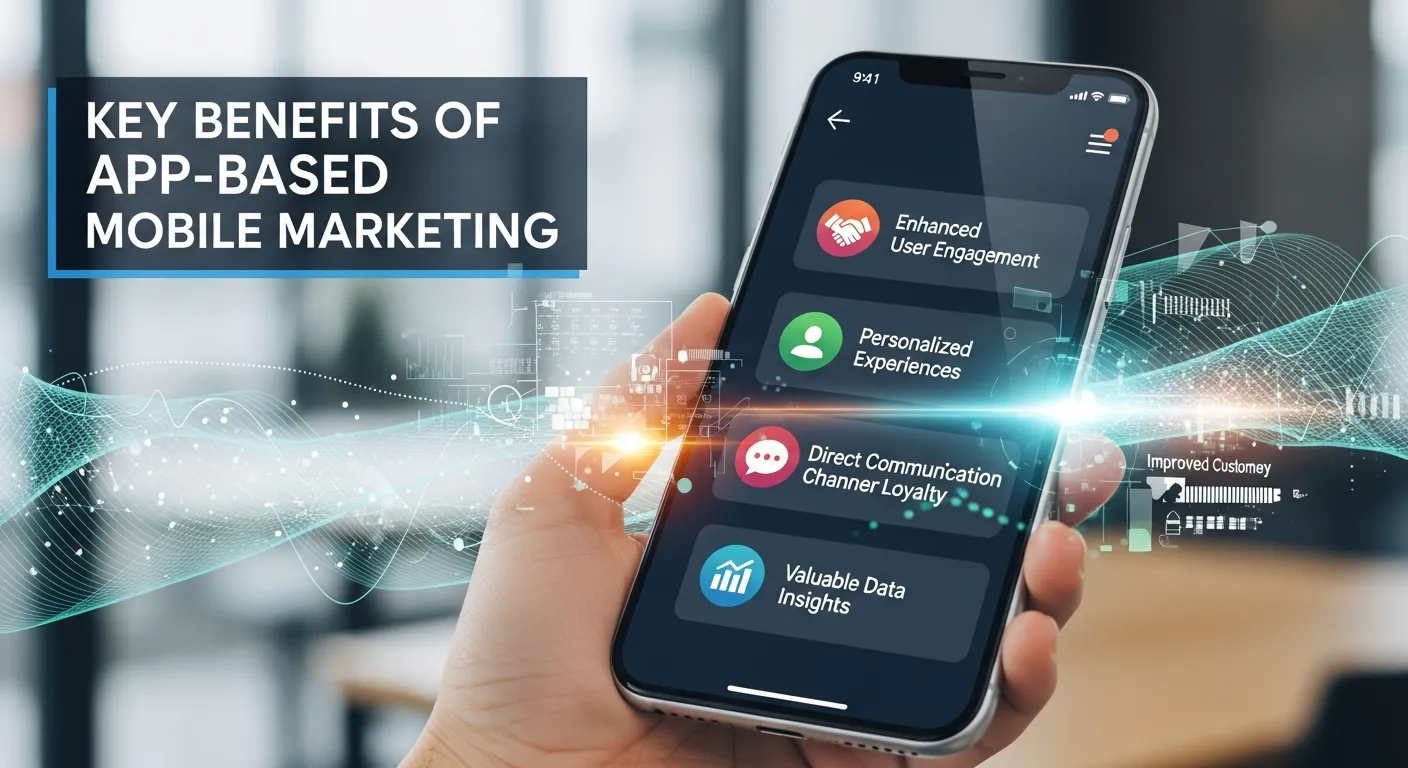
App-based mobile marketing offers several standout benefits when compared to traditional approaches:
Enhanced Personalization
Through user data and analytics, apps empower marketers to create highly customized experiences. For instance, an e-commerce app could send a customer a notification about discounts on items they frequently view. This level of personalization not only increases the chances of conversion but also drives long-term brand loyalty.
Boosted Engagement Rates
Push notifications, in-app messages, and gamification features keep users engaged. Unlike emails or SMS messages that users may ignore, app-based marketing integrates seamlessly into the user experience, creating a high level of interaction.
Cost-Effective in Retargeting
App marketing strategies, such as app remarketing, focus on re-engaging users who have stopped using the app or abandoned their carts. By attracting back existing users, businesses save on acquisition costs while maximizing the return on marketing investment.
Real-Time Communication
Push notifications are central to app-based marketing, offering timely interactions. For instance, a food delivery app could use geofencing to send a targeted promotion when the user walks near a specific restaurant.
Steps to Succeed in App-Based Mobile Marketing
Now that we know the “why,” it’s time to explore the “how.” Here’s a step-by-step guide to executing a successful app-based mobile marketing strategy:
1. Understand Your Target Audience
Before launching your campaign, ensure you have detailed insights about your audience. Use demographic data, in-app behavioral statistics, and surveys to segment user groups. For example:
- Millennials may respond more to gamified features or social sharing options.
- Busy professionals might prefer productivity-focused updates or time-saving features.
2. Leverage Push Notifications
Push notifications can be a game-changer, provided they’re done right. Here are some tips:
- Keep messages concise and action-oriented.
- Include visually appealing elements like emojis or icons.
- Time your notifications to maximize relevancy. For instance, a travel app might send a flight check-in reminder a few hours before departure.
3. Adopt Deep Linking
Deep linking directs users to specific content within your app. For instance, if you send a notification about a sale, deep linking sends users straight to the sale section, reducing friction and improving the likelihood of conversion.
4. Incorporate Gamification
Add a playful element to your app with gamified features like rewards, challenges, or leaderboards. Starbucks’ loyalty program, for example, encourages frequent visits by offering stars that users can redeem for free items.
5. Use Analytics to Drive Decisions
Data is the backbone of successful app marketing. Keep track of:
- Retention rates
- Conversion rates
- User session duration
- Engagement metrics for marketing campaigns
Analyze this data to identify what’s working and tweak your approach accordingly. Platforms like Google Analytics or Mixpanel are great tools for in-depth app analytics.
6. Prioritize User Experience (UX)
All the marketing tactics in the world can’t save an app that offers poor usability. Focus on:
- Maintaining an intuitive design.
- Streamlining onboarding.
- Fixing bugs promptly.
A seamless experience not only boosts engagement but also enhances brand perception.
7. Encourage Reviews and Feedback
Positive reviews in app stores can skyrocket downloads, while honest feedback helps refine your app’s functionality. Prompt satisfied users to leave reviews, and use in-app surveys to gather meaningful user insights.
Leveraging Social Media for App-Based Marketing
Paragraph:
Social media platforms amplify the reach of app-based marketing campaigns. By integrating app notifications with social channels, businesses can create cohesive, real-time campaigns that resonate with users and encourage downloads. Social media also provides valuable insights into user preferences and behavior, which can enhance personalization.
Points:
- Platforms like Instagram, TikTok, and Facebook increase visibility.
- Paid ads and influencer partnerships drive higher app installs.
- User-generated content encourages engagement and loyalty.
Table: Social Media Impact on App Marketing
| Platform | Key Use | Metrics to Track |
|---|---|---|
| Visual engagement, ads | Clicks, impressions, installs | |
| TikTok | Short-form content, trends | Views, shares, installs |
| Retargeting & community | Engagement, conversions | |
| B2B app promotion | Click-through rate, leads |
Relevant keywords included: mobile app social media marketing, effective mobile app marketing
Optimizing the Mobile App Marketing Funnel
Paragraph:
The app marketing funnel ensures users move from awareness to acquisition, retention, and advocacy. Optimizing each stage increases app adoption, engagement, and revenue. A well-designed funnel allows businesses to measure performance, reduce drop-offs, and maximize ROI.
Points:
- Awareness: App store optimization, paid ads, social campaigns.
- Acquisition: Incentives, referrals, seamless onboarding.
- Retention: Push notifications, gamification, personalized content.
- Advocacy: Referral programs, social sharing, rewards.
Table: Funnel Stages and Strategies
| Funnel Stage | Strategy | Goal |
|---|---|---|
| Awareness | Paid ads, ASO, influencer posts | Increase visibility |
| Acquisition | Incentives, onboarding | Drive downloads |
| Retention | Notifications, gamification | Boost engagement |
| Advocacy | Referrals, social sharing | Generate word-of-mouth |
Relevant keywords included: mobile app marketing funnel, mobile app marketing for success
Data-Driven Decision Making in App-Based Mobile Marketing
In the evolving world of app-based mobile marketing, data plays a central role in shaping strategies that drive real results. Modern mobile applications generate vast amounts of user data, including session duration, interaction behavior, purchase history, and feature engagement. When analyzed properly, this data helps businesses understand user intent, predict trends, and design campaigns that resonate deeply with target audiences. Companies that embrace data-driven marketing experience stronger engagement, higher retention rates, and increased lifetime value. By tracking real-time insights, brands can fine-tune campaigns, personalize messaging, and improve overall mobile app marketing for success. Data also enables rapid experimentation, allowing businesses to continuously refine content, offers, and notifications based on user responses, ensuring optimal campaign effectiveness.
The Role of Automation in Effective Mobile App Marketing
Automation has become an essential element of effective mobile app marketing, enabling brands to engage users consistently without excessive manual effort. Automated workflows power welcome messages, onboarding tutorials, abandoned cart reminders, and personalized promotional notifications. These automated touchpoints ensure users receive timely, relevant communication throughout their app journey. Automation also allows marketers to segment users based on behavior, preferences, and activity levels, delivering highly contextual messaging that improves engagement. Through marketing automation tools, brands can orchestrate complex campaigns across multiple channels while maintaining personalization at scale. As mobile ecosystems grow increasingly competitive, automation empowers businesses to stay agile, responsive, and efficient while delivering seamless, user-centric experiences.
Building Emotional Connections Through App Engagement
Long-term success in app-based mobile marketing depends heavily on emotional engagement. Apps that build emotional connections with users tend to enjoy stronger loyalty, advocacy, and lifetime value. By designing experiences that feel intuitive, supportive, and rewarding, businesses can foster trust and emotional attachment. Personalized messaging, thoughtful onboarding journeys, interactive features, and consistent communication all contribute to this emotional bond. When users feel understood and valued, they become more invested in the app experience. This emotional connection strengthens retention, enhances satisfaction, and encourages organic promotion through referrals and social sharing. In a market increasingly driven by experience rather than price, emotional engagement becomes a powerful differentiator.
Integrating Social Engagement into App-Based Marketing Strategies
Social interaction significantly amplifies the impact of mobile app social media marketing when integrated seamlessly with in-app campaigns. Social platforms provide opportunities for storytelling, influencer collaboration, community building, and brand advocacy. When app users share achievements, reviews, or rewards on social channels, it creates authentic exposure and drives organic downloads. Cross-platform engagement reinforces brand presence, allowing users to interact with the brand both inside and outside the app ecosystem. Social engagement also supports real-time feedback loops, enabling businesses to adapt marketing strategies quickly. This interconnected approach strengthens brand credibility, enhances community trust, and accelerates app adoption, reinforcing the overall mobile app marketing funnel.
Future-Proofing Strategies for Sustainable App Growth
To remain competitive in a rapidly evolving digital environment, brands must focus on future-proofing their app-based mobile marketing strategies. Continuous innovation, user-centric design, and agile marketing frameworks ensure long-term sustainability. Technologies such as artificial intelligence, machine learning, predictive analytics, and augmented reality are reshaping how users interact with apps. Businesses that invest early in these innovations position themselves for sustained growth. Additionally, ethical data practices, transparent privacy policies, and security-first development enhance consumer trust, which is vital for longevity. By aligning business goals with evolving consumer expectations, brands can build adaptable ecosystems that thrive in changing market conditions, ultimately driving enduring success and profitability.
Industry Examples of Successful App-Based Marketing
Many businesses across industries are already reaping big returns from app-based campaigns. Here are a few inspiring examples:
- Starbucks
The Starbucks Rewards app is a leader in personalized app marketing. With gamification, exclusive deals, and real-time push notifications, it’s the gold standard for increasing customer retention.
- Nike Training Club
Nike’s fitness app leverages user data to deliver bespoke workout plans, progress tracking, and nutritional advice. Real-time notifications remind users to meet their fitness goals.
- Amazon
Amazon’s AI-driven app interface recommends personalized product suggestions based on browsing history. The seamless blend of data collection and contextual targeting drives tremendous conversion rates.
Challenges in App-Based Mobile Marketing (and How to Overcome Them)
Despite its advantages, app-based marketing isn’t without challenges. But every challenge can be addressed with proactive strategies:
- Over Notification
Bombarding users with excessive notifications can annoy them and lead to app uninstalls. Maintain a strict notification frequency and ensure all messages add value.
- Security Concerns
Users are wary of sharing data, especially sensitive information. Prioritize app security measures, such as end-to-end encryption, and state your data privacy policies upfront.
- Measuring ROI
Tracking returns on app-based marketing can be complex. Use analytics tools to measure KPIs like retention rates, sales growth, and user engagement.
The Future of App-Based Mobile Marketing
With the continuous development of technology, App Marketing has even more wonderful prospects in future.AI and Machine Learning will improve user personalization further, while augmented reality (AR) applications make customer experience truly immersive.
Wearable technology, as another development in app-marketing integration, continues the theme of specialization. For example, fitness applications combined with smart wristbands will push the limits of user experience even more.
Harness the Potential of Mobile Marketing Today
App-based mobile marketing is an essential requirement in this mobile-first world for any business that wants to be relevant. There are so many different things you can do now, other than just increase customer engagement or cash income. The possibilities are literally endless.
Are you ready to begin your app-based mobile marketing journey? See what apps can offer and ensure that your audience keeps coming back for more.
Frequently Asked Questions (FAQs)
1. What is app-based mobile marketing?
App-based mobile marketing uses mobile applications to deliver personalized messages, targeted offers, and real-time notifications, helping businesses engage users, increase retention, and build long-term customer relationships.
2. Why is app-based marketing important?
It enables direct, personalized communication with users, improves engagement rates, strengthens brand loyalty, increases customer lifetime value, and enhances overall marketing efficiency in today’s mobile-first digital environment.
3. How do push notifications help marketing?
Push notifications deliver timely, relevant messages that re-engage users, promote offers, increase retention, drive conversions, and maintain consistent communication without overwhelming the audience when used strategically.
4. What is deep linking in apps?
Deep linking directs users to specific in-app pages, reducing navigation friction, improving user experience, boosting conversions, and making marketing campaigns more effective and user-focused.
5. How does gamification improve app marketing?
Gamification motivates users through interactive rewards, challenges, and achievement systems, encouraging repeat engagement, emotional connection, longer session durations, and increased loyalty toward the brand.
6. Which tools track app marketing performance?
Analytics tools such as Google Analytics, Mixpanel, and Firebase track engagement, retention, conversions, and user behavior, enabling marketers to optimize campaigns and improve decision-making.
7. How do apps improve personalization?
Apps analyze behavioral data, usage patterns, preferences, and interactions to deliver customized content, offers, and notifications that enhance user experience and increase satisfaction.
8. What are common challenges in app marketing?
Over-notification, user privacy concerns, poor segmentation, and difficulty tracking ROI are common challenges, requiring strategic planning, ethical data practices, and continuous campaign optimization.
9. How do apps drive customer loyalty?
By offering personalized experiences, consistent engagement, exclusive rewards, smooth navigation, and reliable performance, apps create emotional connections that strengthen long-term customer loyalty.
10. What is the future of app-based marketing?
AI, machine learning, augmented reality, wearables, and predictive analytics will shape immersive, highly personalized, and data-driven experiences that transform user engagement and marketing effectiveness.


