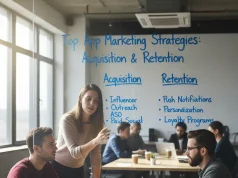

In today’s digital landscape, capturing user attention amid a crowded app marketplace demands more than an innovative concept—it requires a strategic, data-driven framework that adapts dynamically to each individual’s behavior. AI-driven cross-channel automation has emerged as the linchpin for marketers seeking to orchestrate truly personalized experiences at scale. By leveraging machine learning models, real-time data streams, and dynamic audience segmentation, brands can deliver the right message through email, push notifications, in-app prompts, social media, and SMS precisely when a user is most receptive.
Currently, leading organizations such as Stanford University highlight the transformative power of automation in improving customer engagement metrics, while government portals like Data.gov showcase the value of integrated datasets for predictive analytics. In this year (2026), harnessing AI-driven cross-channel automation is no longer optional—it is essential for driving app installations, boosting retention rates, and maximizing lifetime value. Throughout this comprehensive guide, we will walk through a five-part blueprint to design, implement, and optimize an automated marketing engine that aligns every touchpoint with user intent. Whether you are a startup founder or an enterprise marketing leader, you will gain actionable insights, best practices, and real-world examples to elevate your app marketing performance.
Why AI-Driven Cross-Channel Automation Is Essential
Today’s consumers navigate a labyrinth of platforms—mobile, desktop browsers, social feeds, and more—before converting on an app. Traditional, siloed campaigns fail to respond to real-time signals or adapt creatively to shifting interests. AI-driven cross-channel automation remedies these shortcomings by unifying behavioral data into a central intelligence layer that fuels personalized engagement.
Centralizing Data for Holistic Insights
An automated engine begins with consolidating data from mobile analytics, CRM systems, advertising networks, and customer support logs. By storing events in a GDPR- and CCPA-compliant warehouse, marketers eliminate blind spots and ensure privacy. This unified repository becomes the foundation for predictive modeling, enabling you to forecast install propensity, lifetime value, and churn risk.
Dynamic Segmentation and Orchestration
Machine learning algorithms sift through vast amounts of user actions—app opens, browsing patterns, purchase history—and identify dynamic cohorts. Instead of static lists, these groups update in real time: users predicted to churn are flagged for re-engagement flows, while high-value prospects receive premium onboarding messages. An orchestration layer defines if/then rules that trigger messages across email, push, in-app, and social channels based on evolving behavior.
Continuous Optimization with Reinforcement Learning
Once campaigns are live, reinforcement learning fine-tunes delivery windows, creative variants, and channel mix. By A/B testing microcopy generated by AI templates and measuring responses, the system allocates higher weight to top-performing tactics. Studies show that this adaptive approach can boost install rates by up to 35% and retention by 25% compared to manual methods.
Building the Foundation: Data, Segmentation, and Infrastructure

Implementing AI-driven cross-channel automation starts with solid technical groundwork. Without accurate data collection, segmentation engines cannot predict user intent or tailor messages precisely. This section breaks down the critical building blocks required to architect a scalable and privacy-compliant marketing platform.
Integrating Analytics SDKs and APIs
The first step involves embedding analytics SDKs—such as Firebase, Mixpanel, or Amplitude—into your app. These tools capture event-level details like session duration, feature usage, and transaction events. Concurrently, connect advertising network APIs to your ETL pipeline so ad spend and impression data flow into the centralized warehouse. Map each event to a standardized schema to ensure consistent data quality across all sources.
Ensuring Data Governance and Compliance
As you aggregate personally identifiable information (PII), rigorous governance is vital. Employ tokenization or anonymization techniques for names, email addresses, and payment data. Maintain an audit trail for user consent and data deletion requests. This year (2026), privacy-preserving machine learning is at the forefront; integrating tools that support differential privacy will help you stay ahead of evolving regulations.
Developing Behavioral Segmentation Models
With clean data, the next step is building predictive models. Leverage clustering algorithms to identify natural cohorts based on usage patterns. Train classification models—install-propensity, churn-risk, purchase-likelihood—using historical data. Each user receives a dynamic score that updates in near real time, powering targeted campaigns that address individual motivations and pain points.
Setting Up the Orchestration Layer
The orchestration layer is your campaign brain. Here, define multi-step workflows with conditional logic that routes users through email flows, push sequences, in-app experiences, and social ad retargeting. For example, a high-value user who dismisses a push notification might automatically receive an SMS with a time-limited offer. This level of coordination across channels forms the essence of AI-driven cross-channel automation.
Designing Personalized Journeys with Automation Workflows
Once your infrastructure is in place, focus on mapping and executing user journeys that feel relevant and timely. Hyper-personalization drives engagement by tailoring content to each individual’s interests, behavior, and lifecycle stage. In today’s landscape, generic blasts simply won’t cut through the noise.
Mapping Key Touchpoints
Chart the user lifecycle from awareness to advocacy. Identify critical milestones: first ad impression, app store visit, download, first launch, onboarding completion, first purchase, and retention benchmarks at day 7 and day 30. For each milestone, establish triggers that activate tailored messages. For instance, if a user views a product feature tutorial but doesn’t complete onboarding, trigger an in-app helper prompt or a short tutorial video in email.
Creating AI-Powered Message Templates
AI-generated templates simplify the creative process by swapping variable slots—user name, favorite categories, recent actions—into pre-approved designs. Generative AI crafts multiple copy variants, enabling rapid A/B tests on subject lines, body text, and CTAs. This approach reduces manual workload while continuously refining creative based on real-time performance data.
Coordinating Across Channels
True cross-channel automation ensures each interaction builds on the previous one. If an email goes unopened, the system might escalate to a push notification 24 hours later. If the push is ignored, a social ad sequence could follow, leveraging look-alike modeling to attract similar prospects. By orchestrating messages across touchpoints, you increase the chances of conversion without overwhelming any single channel.
Personalizing Incentives and Offers
Dynamic incentives—discounts, exclusive content, loyalty points—should reflect a user’s predicted lifetime value and stage in the funnel. High-value users might receive premium access or VIP onboarding, while new users could benefit from trial extensions. AI-driven cross-channel automation allows you to allocate budgets optimally by offering larger incentives only when they yield a positive return on investment.
Testing, Optimization, and Real-Time Learning

Launching automated campaigns is just the beginning. Continuous testing and optimization ensure your AI-driven cross-channel automation engine evolves with user behavior, shifts in the market, and new platform features.
Multi-Armed Bandit Experiments
Instead of traditional A/B splits, multi-armed bandit algorithms dynamically allocate traffic to higher-performing variants. This approach reduces wasted impressions by steering users toward the best creative from the outset. For example, if one push notification drives a 15% open rate and another 10%, the algorithm will gradually route more traffic to the stronger variant.
Optimizing Send Times and Frequencies
Time-zone models and engagement probability scores determine each user’s peak activity window. Delivering messages when a user is most likely active can boost open rates by up to 40%. Simultaneously, frequency capping and decay controls prevent message fatigue by pausing outreach to users who have engaged too frequently within a short period.
Feedback Loops and Model Retraining
Feed post-engagement metrics—opens, clicks, conversions, retention—back into your predictive models. Establish automated retraining cycles, so the system recalibrates propensity scores weekly or daily. In this way, AI-driven cross-channel automation remains accurate and responsive as user preferences evolve.
Real-Time Dashboards and Alerts
Maintain a centralized analytics dashboard that displays key performance indicators in real time: Cost per Install (CPI), install-to-purchase conversion, 7- and 30-day retention, average revenue per user (ARPU), and engagement rates. Set threshold alerts for anomalies, such as a sudden spike in churn risk or a drop in open rates, enabling rapid intervention.
Measuring Success: KPIs and Performance Metrics
Quantifying the impact of AI-driven cross-channel automation requires tracking a comprehensive set of metrics. By correlating automated actions with business outcomes, you can justify budgets, refine strategies, and demonstrate ROI to stakeholders.
Cost per Install (CPI)
CPI is calculated as total ad spend divided by new installs attributed to each channel. Analyzing CPI by cohort helps you identify which channels and creatives deliver the most cost-effective acquisition.
Install-to-First-Purchase Conversion
This metric measures the percentage of users who complete a purchase within seven days of installation. Segmenting by campaign or creative variant uncovers which messaging and incentives drive the fastest path to revenue.
7-Day and 30-Day Retention Rates
Retention curves show the proportion of users still active after one week and one month. AI-driven cross-channel automation can lift these metrics by delivering onboarding nudges, feature highlights, and re-engagement prompts tailored to each cohort.
AI-Driven Cross-Channel Automation for App Growth
In today’s fast paced digital marketing landscape, AI-Driven Cross-Channel Automation empowers marketers to optimize the entire app-marketing-funnel—from acquisition to retention. By leveraging predictive analytics and real-time data, businesses can identify high-value users, personalize engagement, and maximize long-term profitability across channels like email, push notifications, in-app messaging, and social media.
1. Average Revenue per User (ARPU) & Lifetime Value (LTV)
Understanding ARPU and LTV is critical for evaluating campaign performance and scaling efficiently.
Why It Matters:
- Identifies high-value acquisition sources
- Helps optimize budget allocation
- Improves long-term ROI
Key Actions:
- Analyze ARPU by channel (email, social, app stores like Amazon Appstore)
- Calculate LTV:CPI (Cost Per Install) ratios
- Prioritize campaigns with higher retention and monetization
Pro Tip:
Focus on users who generate repeat revenue instead of just increasing install numbers—quality over quantity.
2. Engagement Rates Across Channels
Engagement metrics reveal how effectively your campaigns connect with users.
Key Metrics to Track:
- Email open rates & CTR (email-marketing for e-commerce)
- Push notification click rates
- In-app event completions
- Social media engagement
Optimization Strategies:
- Align messaging with user behavior
- Use AI to predict optimal send times
- Personalize content dynamically
- Test creatives regularly
These insights are important to marketers aiming to improve user experience and retention.
3. Real-Time Optimization with AI
AI enables continuous learning and campaign improvement.
How It Works:
- Tracks user interactions across channels
- Identifies high-performing segments
- Adjusts bids, creatives, and timing automatically
Benefits:
- Faster decision-making
- Reduced wasted ad spend
- Improved conversion rates
This forms the backbone of modern marketing strategies for success.
4. Cross-Channel Personalization Strategy
AI helps deliver consistent and personalized experiences across all touchpoints.
Channels to Integrate:
- Email campaigns
- Push notifications
- In-app messaging
- Paid ads & social media
Best Practices:
- Use unified customer profiles
- Trigger messages based on user actions
- Maintain consistent brand messaging
Integration across mobile apps for marketers ensures seamless user journeys.
KPI Optimization Table
| KPI | What It Measures | Optimization Strategy | Business Impact |
|---|---|---|---|
| ARPU | Revenue per user | Focus on high-value segments | Increased profitability |
| LTV | Long-term user value | Improve retention & engagement | Sustainable growth |
| LTV:CPI Ratio | Profitability of acquisition | Reallocate budget to best channels | बेहतर ROI |
| Email CTR | Engagement with email campaigns | Personalize content & timing | Higher conversions |
| Push Click Rate | Notification effectiveness | Optimize frequency & relevance | Better retention |
| In-App Events | User interaction within app | Improve UX & onboarding | Increased engagement |
| Social Engagement | Interaction with social ads | Creative testing & targeting | Stronger brand connection |
Advanced Strategies for 2026
To stay ahead in the evolving app ecosystem, adopt these forward-thinking approaches:
Innovation Areas:
- Use generative AI for ad creatives and copy
- Explore AR/VR and voice-based engagement channels
- Implement privacy-first machine learning models
- Automate campaign workflows with app marketing software
Growth Tactics:
- Optimize each stage of the app-marketing-funnel
- Continuously test and refine campaigns
- Align automation with user lifecycle stages
FAQs: AI-Driven Cross-Channel Automation
1. What is AI-Driven Cross-Channel Automation?
AI-Driven Cross-Channel Automation uses artificial intelligence to manage and optimize marketing campaigns across multiple channels like email, push notifications, in-app messaging, and social media in real time.
2. Why is AI-Driven Cross-Channel Automation important for app growth?
It helps streamline the app marketing funnel, improves targeting, and delivers personalized experiences, leading to higher app installs, better engagement, and increased retention.
3. How does AI improve user acquisition?
AI analyzes user behavior and acquisition data to identify high-performing channels, enabling marketers to invest in campaigns that attract high-value users.
4. What is the role of ARPU and LTV in this strategy?
ARPU and LTV help measure user value. By focusing on channels with better LTV:CPI ratios, marketers can optimize long-term profitability and campaign efficiency.
5. Which channels are included in cross-channel automation?
It typically includes email, push notifications, in-app messaging, social media, and app store platforms like Amazon Appstore.
6. How does AI enhance engagement across channels?
AI personalizes content, optimizes send times, and automates messaging based on user behavior, improving open rates, click-through rates, and in-app activity.
7. What tools are used for AI-driven cross-channel automation?
Marketers use advanced app marketing software, analytics platforms, and automation tools to manage campaigns and track performance across channels.
8. How does this strategy support digital marketing success?
It integrates multiple digital-marketing channels into a unified system, ensuring consistent messaging and better customer experiences.
9. What are the key KPIs to track?
Important metrics include:
- ARPU (Average Revenue per User)
- LTV (Lifetime Value)
- CTR (Click-Through Rate)
- Engagement rates across channels
These are important-to-marketers for measuring success.
10. What are future trends in AI-driven cross-channel automation?
Emerging trends include:
- Generative AI for content creation
- Voice and AR/VR marketing
- Privacy-first data strategies
- Advanced predictive analytics