

The mobile app market is thriving, with over 3.5 million apps available on the Google Play Store and nearly 2 million on Apple’s App Store. For app developers and marketers, the competition is fierce, and standing out has never been more challenging.
Why AI Chatbots are a Game-Changer for Mobile App Marketing
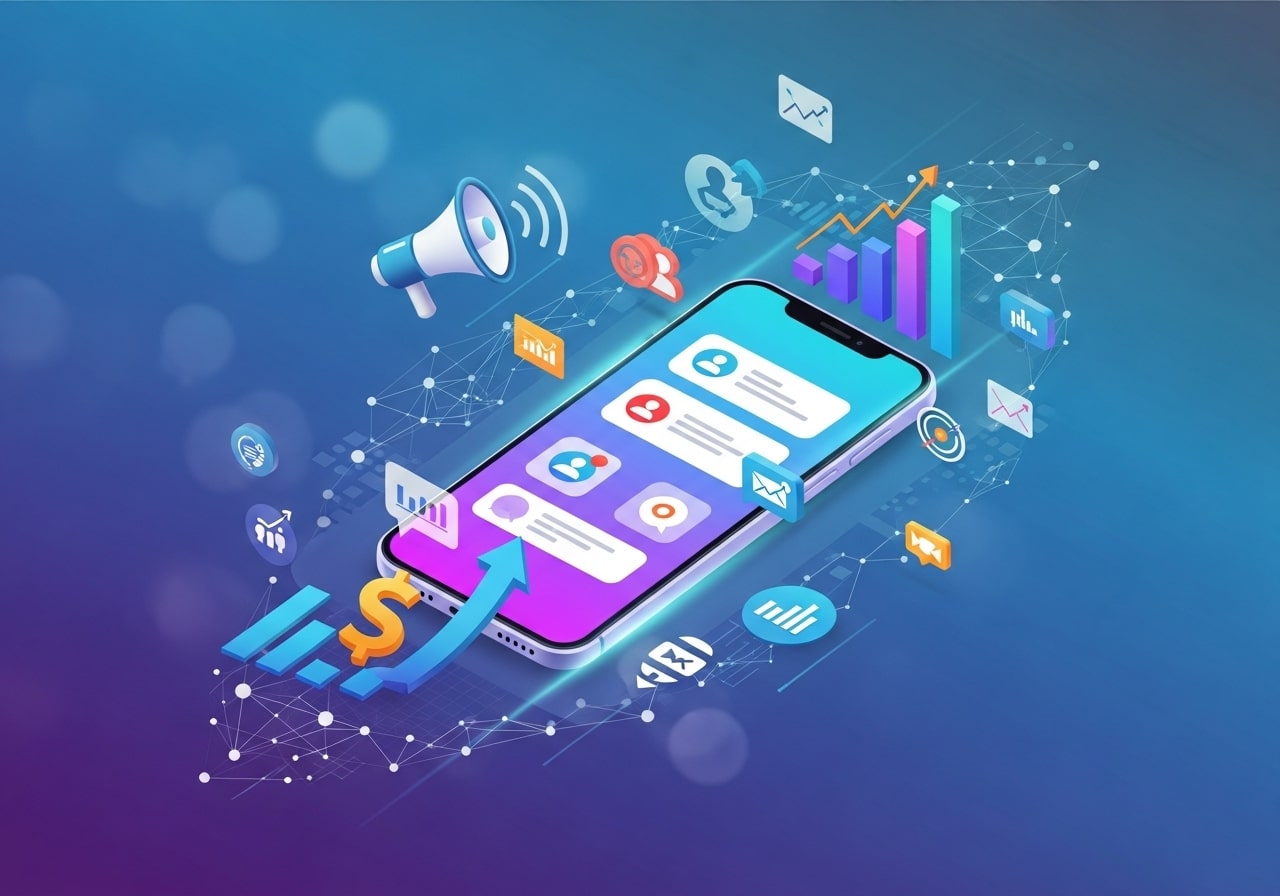
AI chatbots are much more than digital assistants; they are the bridge between your app and its users. By harnessing artificial intelligence, chatbots provide real-time communication, personalized user experiences, and data-driven insights. Here’s why they are game-changers for mobile app marketing.
1. 24/7 User Support
Unlike human customer support teams, chatbots never sleep. Users frequently encounter issues or ask questions outside of standard operating hours. An AI chatbot integrated into your mobile app ensures these concerns are addressed instantly, improving user satisfaction and retention rates.
For example, a fitness app’s chatbot can guide users through subscription inquiries at midnight, offering them tailored solutions instead of them leaving frustrated.
2. Personalized User Experiences
Personalization remains the gold standard in mobile app marketing, and AI chatbots deliver. Advanced chatbots can analyze user behavior, preferences, and interactions to provide customized recommendations.
Take, for instance, music apps like Spotify. An AI-driven chatbot could suggest playlists based on a user’s recent listening habits, making the app feel intuitive and personal.
3. Streamlined Onboarding Process
The first experience users have with your app is crucial. Research shows that 25% of apps are used only once before being abandoned. A chatbot can interact with users during onboarding, walking them through features, answering FAQs, and ensuring they understand the app’s value proposition.
Instead of static tutorials, a chatbot creates a conversational and interactive walkthrough, resulting in a deeper user connection with your app.
4. Boosting Engagement with Push Notifications
Push notifications can be hit-or-miss. When poorly targeted, they come off as spammy and annoying, leading to user churn. However, when paired with AI chatbots, push notifications take on a more relevant, user-specific role.
For a mobile shopping app, for example, a chatbot can send a personalized push notification like, “Hey Sarah, the sneakers you loved are now back in stock!” This level of customization increases click-through rates and user engagement.
5. Revenue Optimization Through Upselling
AI-powered chatbots are excellent salespeople, subtly upselling and cross-selling within your app. Equipped with data about user preferences and purchase history, they can suggest relevant products or services.
For example, a food delivery app chatbot could say, “Add a dessert to your order and enjoy 10% off!” It’s an effortless way to drive additional sales without being pushy.
Gamification Through Chatbots
AI chatbots can make your app more engaging by incorporating gamification elements. By offering quizzes, challenges, or rewards within chatbot interactions, users feel motivated to engage repeatedly. For instance, a language-learning app can prompt daily challenges or mini-tests through the chatbot, encouraging consistent practice. Gamified experiences improve retention by turning routine interactions into enjoyable activities. They also provide valuable insights into user behavior and preferences. When users are rewarded for completing tasks, the app strengthens loyalty and increases overall engagement, creating a more interactive and entertaining environment that keeps users coming back.
Multilingual Chatbot Support
To reach a global audience, AI chatbots can support multiple languages. Advanced chatbots detect user language preferences automatically and respond appropriately, ensuring seamless communication for diverse audiences. This is especially useful for travel, e-commerce, or educational apps that target users worldwide. Multilingual support improves accessibility, builds trust with international users, and reduces barriers to app adoption. Implementing this feature demonstrates cultural sensitivity and inclusivity while also enhancing the user experience. By providing personalized assistance in users’ native languages, apps can expand their reach and engagement effectively across different markets.
AI Chatbots for Push Notification Optimization
Push notifications are only effective when personalized and relevant. AI chatbots can analyze user behavior to determine the best time, frequency, and content for notifications. Instead of sending generic alerts, chatbots can craft messages tailored to user preferences, increasing open rates and interactions. For example, an e-commerce app’s chatbot might notify users about restocked items they previously viewed or recommend complementary products. Optimized push notifications reduce the risk of annoying users and app uninstalls. By combining predictive analytics with real-time user data, chatbots enhance communication strategies, ensuring notifications are impactful and drive meaningful engagement.
AI Chatbots for User Retention
Retention is critical in the mobile app ecosystem, and AI chatbots can play a pivotal role. By sending personalized reminders, suggesting relevant features, or addressing pain points, chatbots keep users engaged long-term. They can identify inactive users and initiate re-engagement campaigns or provide incentives for returning to the app. For example, a fitness app chatbot might remind users of their workout goals or offer new challenges to reignite activity. By consistently providing value and personalized experiences, chatbots help reduce churn rates and ensure users see ongoing benefits, creating a loyal and active user base.
AI Chatbots for Customer Feedback
Collecting user feedback is essential for app improvement, and AI chatbots simplify this process. Chatbots can prompt users for reviews, ratings, or suggestions in a conversational, non-intrusive manner. Real-time feedback allows developers to quickly identify bugs, pain points, or areas needing enhancement. For example, after completing a purchase, an e-commerce app chatbot can ask, “How was your experience with this order?” Insights collected help refine app features, marketing strategies, and customer support. By using chatbots for feedback, businesses also demonstrate that they value user opinions, strengthening trust and engagement.
AI Chatbots for E-commerce Personalization
In e-commerce apps, AI chatbots can function as personal shopping assistants. By analyzing purchase history, browsing patterns, and preferences, chatbots recommend products, promotions, or bundles tailored to each user. For instance, a fashion app chatbot can suggest outfits matching a user’s style or notify them about limited-time discounts on favored brands. This level of personalization increases conversion rates, average order value, and customer satisfaction. AI chatbots also help reduce cart abandonment by prompting users to complete pending purchases. Personalized shopping experiences create convenience, strengthen loyalty, and differentiate your app in competitive marketplaces.
AI Chatbots for Analytics and Insights

AI chatbots don’t just interact with users—they generate actionable data. By tracking user interactions, queries, preferences, and behavior patterns, chatbots provide valuable insights into app performance and user needs. This information can inform product development, marketing campaigns, and UX improvements. For example, frequent queries about a feature may indicate usability issues, prompting design adjustments. Analytics from chatbots help businesses understand trends, segment audiences, and optimize strategies based on actual user behavior. Using AI chatbots as a dual-purpose tool—communication and analytics—empowers developers and marketers to make data-driven decisions for continuous app growth.
How to Incorporate AI Chatbots into Your Mobile App Marketing Strategy
Now that we’ve covered the benefits, let’s explore how you can integrate AI chatbots effectively into your mobile app marketing strategy.
Step 1. Choose the Right Platform for Integration
Not all chatbots are created equal. Determine the right platform that aligns with your app. Tools like Dialogflow, ChatGPT API, and ManyChat offer unique benefits tailored to different app types and business needs.
Before integrating, ensure the chatbot can handle your app’s key requirements, from multilingual support to advanced user analytics.
Step 2. Define the Chatbot’s Role
Clearly outline what your chatbot should accomplish. Will it assist with user queries? Improve retention by personalizing content? Guide users through subscription options? A defined role ensures the chatbot operates effectively without overwhelming users.
Pro tip: Prioritize user needs when determining the chatbot’s role. A chatbot serving a video-streaming app might focus more on content recommendations, while one on an e-commerce app might prioritize shopping assistance.
Step 3. Make the Chatbot Conversational
People prefer interacting with chatbots that sound human. Incorporate natural language processing (NLP) capabilities to ensure your chatbot communicates conversationally. Avoid robotic, overly wordy replies to keep the interaction seamless.
For instance, if a user asks a book app chatbot, “What should I read next?”, the bot could reply, “Based on what you’ve been reading, you might love ‘The Great Gatsby’ or ‘1984.’ Shall I show you more details?”
Step 4. Leverage Data for Constant Improvement
One of the major advantages of AI chatbots is their ability to learn over time. Use analytics tools to track user interactions and improve chatbot responses. Does your chatbot struggle with specific queries? Are there gaps in how it communicates? Work on refining these aspects to make it better.
Step 5. Promote Your Chatbot’s Availability
Your users won’t know about your helpful chatbot unless you tell them. Promote its benefits across your app store listings, social media platforms, and marketing emails. Use compelling calls-to-action like, “Need instant answers? Try our AI chatbot today!”
Step 6. Collect Feedback & Continuously Test Performance
No system is flawless. Encourage users to provide feedback on their chatbot experience and use these insights to refine how it works. Regular A/B testing on chatbot scripts and flows can also help spot bottlenecks early.
Success Stories of AI Chatbots in Mobile App Marketing
Sometimes, nothing is more motivating than seeing how other brands have succeeded. Here are two real-world examples of how companies leveraged AI chatbots to transform their apps.
Starbucks’ “My Starbucks Barista”
Starbucks introduced an AI-powered chatbot that allows users to order their favorite drinks via text or voice. The chatbot personalizes suggestions based on order history, seamlessly integrates with payment options, and ensures a top-notch experience.
This initiative not only improved app engagement but also strengthened brand loyalty among coffee enthusiasts.
Duolingo’s DuoBot
Language-learning app Duolingo uses an AI-powered chatbot (nicknamed DuoBot) to engage users in real conversations. It enhances the learning experience, offers feedback on language usage, and pushes notifications to keep users returning daily.
The result? Higher user retention and rave reviews from millions of users worldwide.
Take Your Mobile App to the Next Level
AI chatbots are the missing puzzle piece in mobile app marketing, offering unparalleled cost-efficiency, personalization, and engagement. Whether your goal is to enhance customer support, boost in-app sales, or simply improve user retention, there’s no denying the impact these digital assistants can have.
Are you ready to revolutionize your app strategy and see the benefits first-hand? With AI chatbots paving the way, the possibilities are endless.
Need assistance crafting an AI-powered strategy for your app? Start today and explore how our expertise can help transform your ideas into actionable results!
FAQ: AI Chatbots for Mobile App Marketing
1. What is an AI chatbot?
An AI chatbot is a software program that uses artificial intelligence to simulate human-like conversations with users. It can answer questions, provide personalized recommendations, guide onboarding, and even facilitate transactions within apps.
2. How do AI chatbots improve user engagement?
By offering real-time, personalized interactions, AI chatbots make app experiences more relevant and convenient. They can send tailored push notifications, suggest content or products, and guide users through app features, increasing retention and engagement.
3. Can AI chatbots handle complex queries?
Yes, advanced chatbots equipped with natural language processing (NLP) can understand and respond to complex questions. They learn over time from interactions, continuously improving their accuracy and usefulness.
4. Do AI chatbots replace human customer support?
Not entirely. AI chatbots handle routine queries and provide 24/7 assistance, freeing up human agents for more complex or sensitive issues. They complement, rather than replace, customer support teams.
5. Are AI chatbots expensive to implement?
Costs vary depending on the platform, app complexity, and chatbot features. Many affordable tools and APIs (e.g., Dialogflow, ChatGPT API) make it possible for small to medium apps to integrate AI chatbots without huge investments.
6. How can chatbots increase revenue in apps?
Chatbots can upsell and cross-sell products based on user behavior, suggest premium features, or push limited-time offers. Personalized recommendations help convert casual users into paying customers.
7. How do I measure a chatbot’s success?
Key metrics include user engagement rates, query resolution times, retention rates, click-through rates on suggestions or notifications, and revenue generated through upsells or conversions.
8. Can chatbots work on both iOS and Android apps?
Yes, AI chatbots can be integrated across multiple platforms, ensuring consistent user experiences on iOS, Android, and even web apps.
9. Do AI chatbots comply with privacy regulations?
When properly configured, chatbots can comply with GDPR, CCPA, and other privacy laws by anonymizing data, obtaining user consent, and limiting data retention.
10. How do I continuously improve my chatbot?
Track interactions, gather user feedback, run A/B tests on chatbot flows, and update scripts regularly. AI chatbots also learn from past interactions to become smarter over time.


