
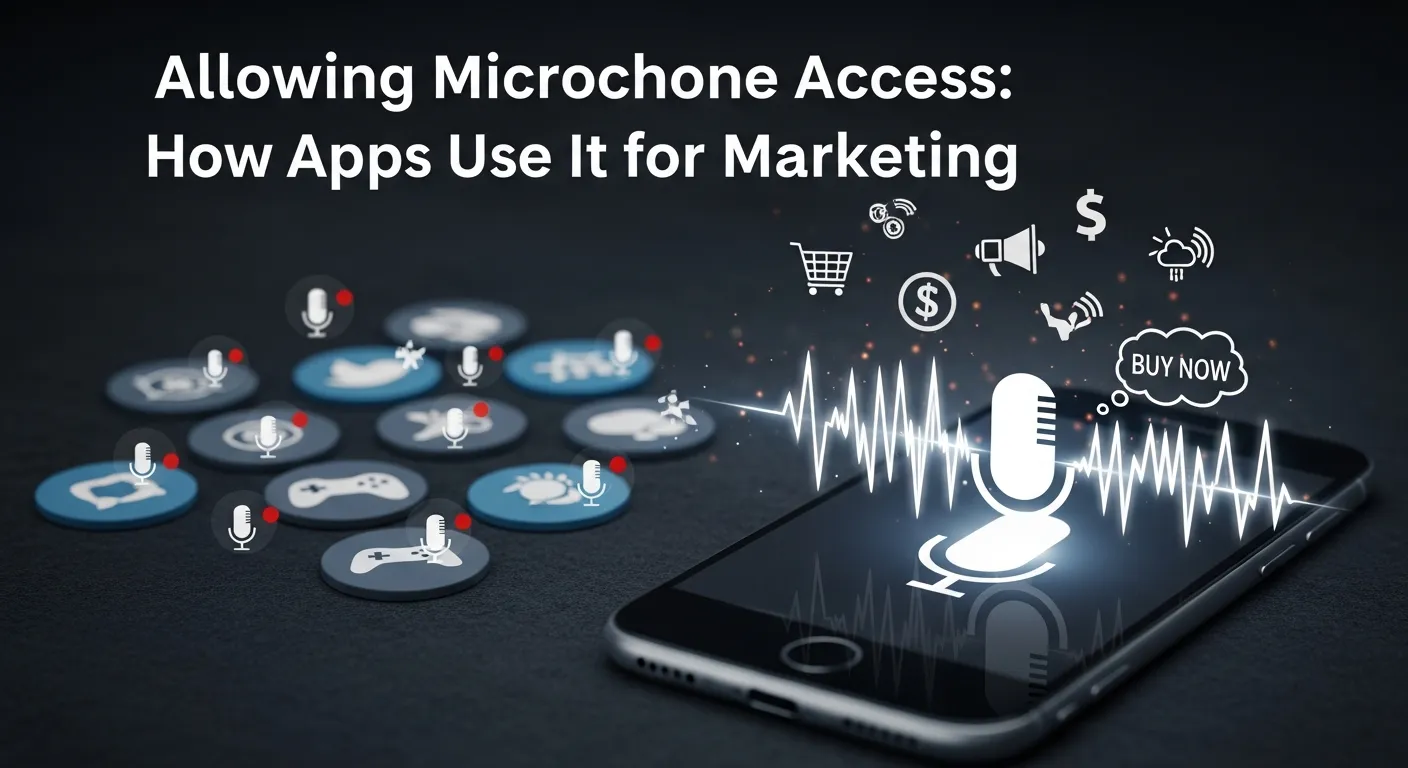
This article explains how allowing microphone access enables apps to collect audio data for marketing, invade privacy, and track user behavior. It also highlights hidden risks, real examples, and practical steps users can take to protect personal data and digital privacy.
The Allure of Free Apps
Most apps are free to download and use, which makes them extremely attractive to users. From games to productivity tools, a stock market app on iPhone, or a Shopify business app, people enjoy accessing premium features without paying a cent. However, this convenience often comes at a hidden cost — your personal data.
Developers monetize these “free” apps primarily through advertising and user data collection. By allowing microphone access, users unknowingly enable apps to capture ambient sounds, background conversations, and even snippets of daily activity. When combined with other data such as browsing history, location, and contacts, marketers can build highly detailed profiles that predict interests, spending habits, and preferences. This information is then used to serve highly targeted ads that feel personalized, but are built on covert surveillance.
Many apps that claim to help users market your Android app effectively, market your app for free, or market your Shopify app may engage in extensive tracking practices. Although these tools appear helpful, their main function may secretly be harvesting user data, highlighting the hidden trade-off behind “free” applications.
The Microphone Permission Request
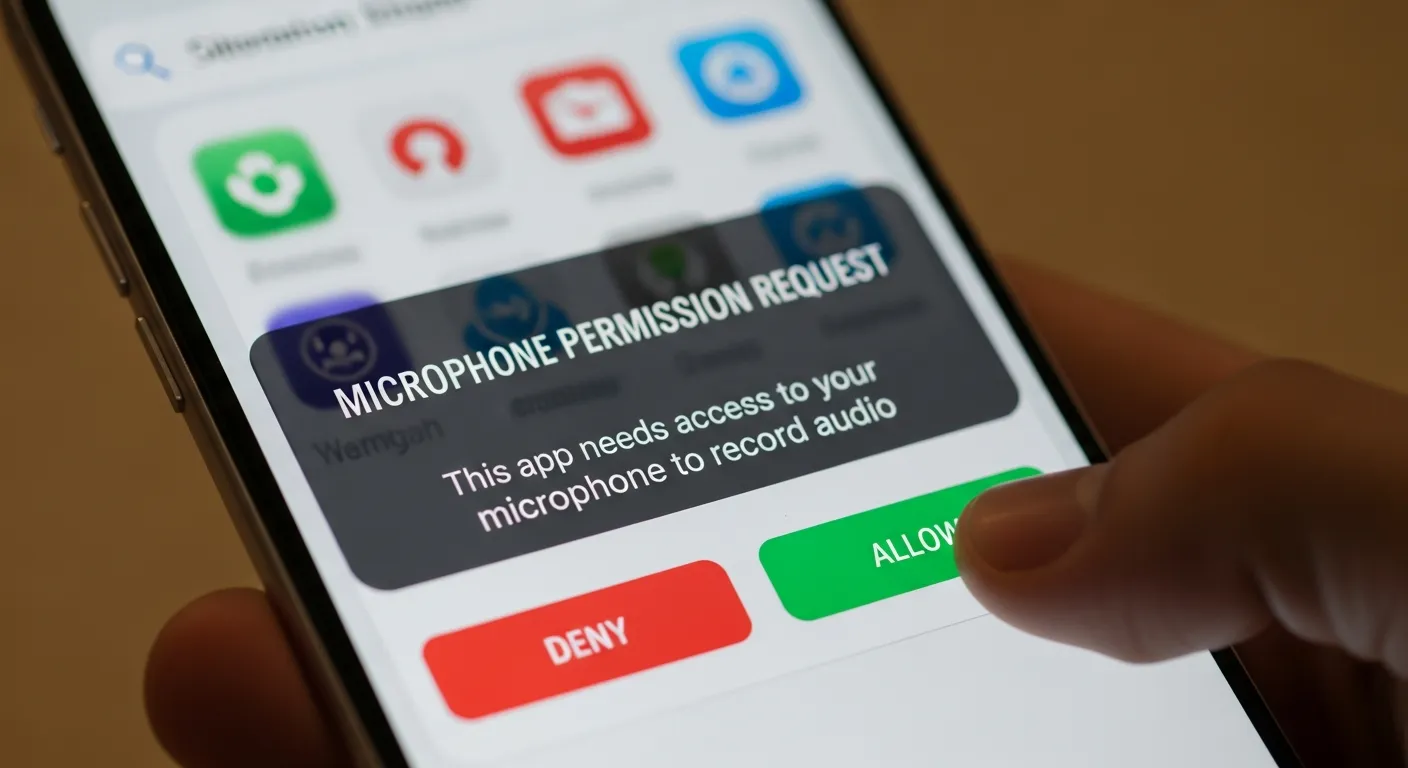
Upon installing an app, however, it often asks for several permissions. These might include access to your camera, location, and microphone. Some permissions are required to make an app normal, while others are completely unnecessary. For example, in the absence of an apparent reason, one simple game app might request microphone access without any qualms at all. These permissions are. As for the users, they are eager to use that app and always lazily click on “Yes” without giving a second thought.
Hidden Data Collection Practices
Once microphone access is granted, some apps use this feature to collect ambient sounds and conversations. This data is then analyzed and sold to advertisers to tailor ads to your preferences. For example, if you’re discussing a product near your phone, you might start seeing ads related to that product, leading you to believe your phone is eavesdropping on your conversations.
Real-World Examples
Several apps have been found to misuse microphone access for marketing purposes. For instance, some Android games were discovered to be using the microphone to track users’ TV viewing habits. These apps, often bundled with software like Alphonso, listen for audio cues from television programs and use this data to serve targeted ads.
The Role of Inaudible Signals
Some apps don’t listen to your conversations directly but instead detect inaudible ultrasonic signals emitted by TVs and other devices. These signals can be picked up by your phone’s microphone and used to track your activities across different platforms. This practice raises significant privacy concerns, as users are often unaware that their devices are listening in the background.
The Privacy Paradox
Many users are aware of the potential privacy risks associated with granting microphone access, but continue to do so due to convenience or lack of understanding. This phenomenon, known as the “privacy paradox,” highlights the disconnect between users’ privacy concerns and their actual behaviors. Developers exploit this by designing apps that encourage users to grant permissions without fully informing them of the implications.
How Marketers Use Microphone Data
Paragraph
Microphone data provides valuable insights into user habits, preferences, and emotional responses. Marketers analyze sound patterns to predict purchasing behavior and personalize advertising content. This information helps businesses increase engagement, conversion rates, and customer retention.
Key Uses of Microphone Data
- Identifying lifestyle preferences
- Tracking daily routines
- Monitoring emotional tone
- Understanding purchasing intent
- Improving targeted advertising strategies
Microphone Data Usage in Marketing
| Purpose | How It Works | Impact on Users |
|---|---|---|
| Ad Targeting | Detects contextual audio signals | More personalized ads |
| Behavior Tracking | Analyzes ambient sounds | Detailed activity profiling |
| Market Research | Studies speech patterns | Predicts buying behavior |
| Cross-Device Tracking | Detects ultrasonic signals | Tracks movement across devices |
Understanding App Privacy Policies and Terms of Service
While many users skip reading app privacy policies, these documents are crucial for understanding how microphone access and other sensitive data are collected and used. Privacy policies disclose whether an app shares data with third parties, engages in behavioral profiling, or uses analytics SDKs to track user activity. For example, apps may indicate that collected audio is used “for marketing purposes” or “to improve services,” which often masks extensive tracking. Users who carefully review these policies can make informed decisions about granting permissions and are less likely to fall victim to covert data collection.
Voice Assistants and Smart Features: Benefits vs. Risks
Voice-activated features, such as digital assistants or hands-free controls, are highly convenient but can pose hidden privacy risks. These apps often require continuous microphone access, even when not in active use. While audio may be processed locally, metadata—like usage frequency, patterns, and interaction context—can still be collected and shared with advertisers.
Example: An app may monitor when you say certain keywords related to products or services and then use that data to serve targeted ads later. While convenient, this continuous listening creates a background privacy vulnerability. Users should consider enabling voice features only when needed and disabling them afterward to minimize exposure.
Cross-Device and Multi-Platform Tracking
Microphone data is increasingly combined with other signals—like location, app activity, and device identifiers—to track users across multiple platforms. This “cross-device tracking” enables advertisers to build highly detailed profiles of user behavior. For instance, an app might detect an ultrasonic signal from a TV ad, then combine that information with smartphone app usage to predict interests and show hyper-targeted ads.
Privacy Concern: Users are rarely aware that their interactions on one device could inform advertising on another. Regular permission audits, restricting microphone access, and limiting third-party app integrations can mitigate these risks.
Third-Party SDKs and Hidden Microphone Access
Many apps integrate third-party SDKs for analytics, monetization, or advertising. Even if the main app does not explicitly use microphone data, these SDKs may access it indirectly. This creates a hidden pathway for data collection, sometimes without developer awareness or user consent.
Example: A popular game might include an ad SDK that collects ambient audio to determine when the user is watching TV or listening to music. This data is then used for behavioral profiling, even though the game itself never needed microphone access. Users should prioritize apps from reputable developers, read user reviews, and avoid apps with excessive permissions.
Emerging Privacy Laws and Digital Rights
Global privacy regulations, such as GDPR (Europe), CCPA (California), and similar laws, aim to protect users’ personal data—including audio and microphone data. These laws require apps to obtain explicit consent for data collection, disclose data-sharing practices, and allow users to revoke permissions.
Impact for Users: By understanding their rights under these laws, users can demand transparency and make informed decisions about app usage. Advocating for stronger privacy standards encourages developers to adopt ethical tracking practices.
Practical Tip: Keep an eye on privacy dashboards, use permission managers, and exercise your legal rights to limit unnecessary data collection.
Best Practices for Managing App Permissions
Paragraph
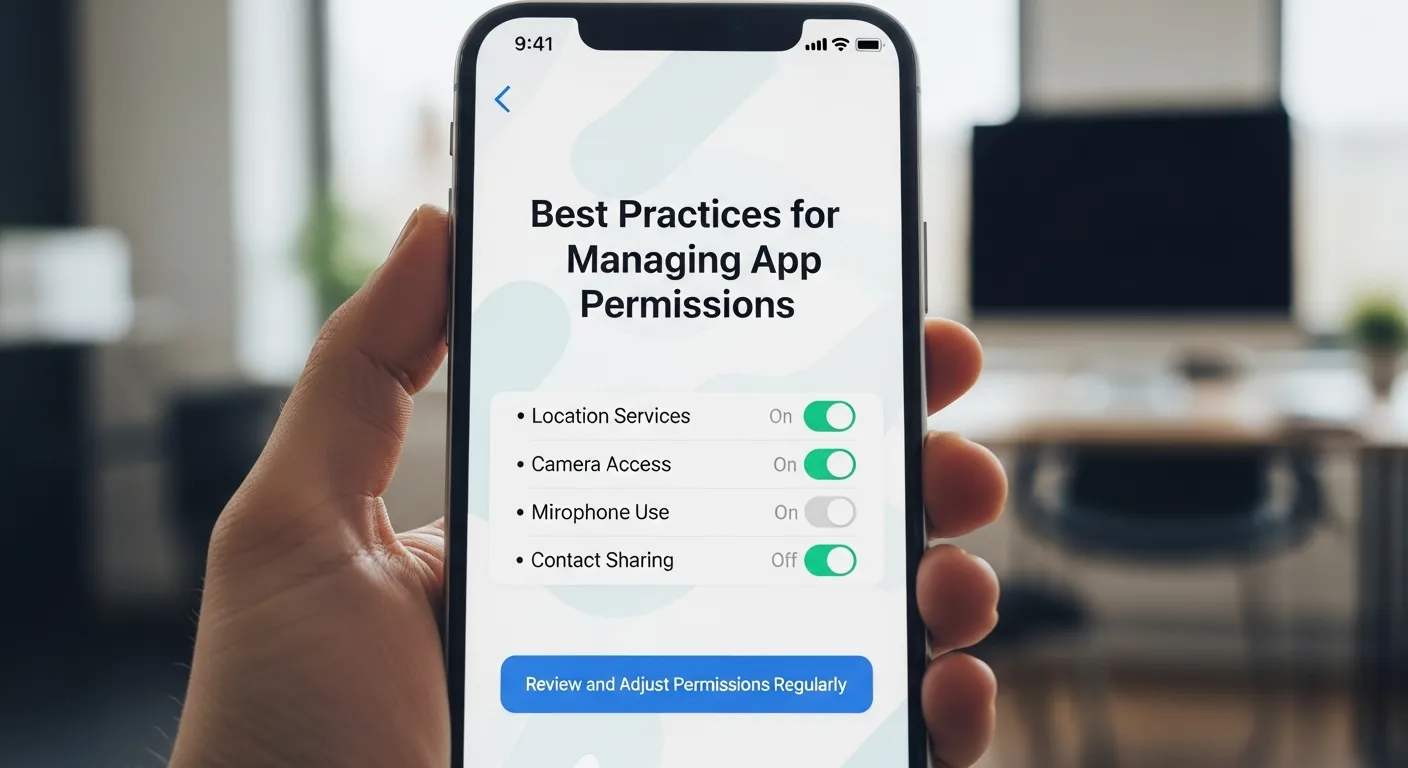
Managing app permissions proactively can significantly reduce privacy risks. By understanding how permissions work and controlling access, users can prevent unwanted data collection while maintaining full device functionality.
Practical Tips
- Review permissions monthly
- Disable microphone access for unnecessary apps
- Install trusted apps only
- Avoid granting permissions at first launch
- Use built-in privacy dashboards
Safe vs Risky Permissions
| Permission | Risk Level | Recommendation |
|---|---|---|
| Microphone | High | Grant only when essential |
| Camera | High | Enable for trusted apps |
| Location | Medium | Use “while using app” |
| Contacts | Medium | Avoid unless necessary |
| Storage | Low | Generally safe |
Protecting Your Privacy
To safeguard your privacy, it’s essential to be vigilant about the permissions you grant to apps. Here’s how you can take control:
1. Review App Permissions Regularly
Both Android and iOS devices allow you to review and manage app permissions. Regularly check which apps have access to your microphone and revoke permissions for those that don’t require it.
2. Be Cautious with New Apps
Before installing a new app, research its purpose and read user reviews. Be wary of apps that request unnecessary permissions.
3. Use App Permission Managers
Some devices offer permission manager tools that provide a comprehensive overview of all app permissions. Utilize these tools to monitor and control access to sensitive features like your microphone.
4. Educate Yourself and Others
Stay informed about the latest privacy practices and share this knowledge with friends and family. The more people are aware, the less likely they are to fall victim to deceptive practices.
Conclusion
These apps can extend the Digital experience, but we must always be prudent with their requests using operational facilities. This is because sometimes developers use some subtle techniques to gather information for marketing purposes, and we need our sense of value. Once we have told ourselves a certain thing, there is no going back on that promise. By keeping alert and being proactive, everyone can be a beneficiary of scientific and technological progress without compromising personal information.
Frequently Asked Questions (FAQs)
1. Why do apps request microphone access even when it seems unnecessary?
Many apps request microphone access to gather background audio signals, analyze user behavior, improve targeted advertising, and build marketing profiles, often without clearly explaining how this sensitive data will actually be used.
2. Can apps secretly record conversations using microphone access?
While most apps deny recording conversations directly, some collect ambient sound patterns, ultrasonic signals, and audio cues that can still reveal sensitive personal information and compromise overall digital privacy.
3. Is allowing microphone access always dangerous?
Allowing microphone access is not always harmful, but granting unnecessary permissions significantly increases the chances of unauthorized surveillance, data misuse, privacy invasion, and unwanted behavioral tracking.
4. How can I check which apps use my microphone?
You can review microphone access permissions by visiting your device’s privacy settings, selecting microphone controls, and carefully checking which installed applications currently have active audio access.
5. Can microphone data be sold to advertisers?
Yes, some developers monetize collected audio insights by sharing or selling behavioral data to advertisers, enabling hyper-targeted marketing strategies that often compromise user privacy and consent.
6. Do iPhones offer better microphone privacy than Android devices?
Both iOS and Android provide strong permission controls, but real privacy protection depends largely on user awareness, cautious permission management, and regular monitoring of app behavior.
7. How can I market my android app effectively without violating user privacy?
Developers should focus on transparent data policies, ethical tracking methods, user consent, and value-driven marketing strategies instead of intrusive data collection and surveillance practices.
8. Is ultrasonic tracking legal?
The legality of ultrasonic tracking differs by region, but privacy advocates widely criticize this hidden technology because it enables covert surveillance and cross-device user tracking.
9. Does revoking microphone access affect app performance?
Revoking microphone permissions may disable voice-based features, but most apps continue functioning normally, ensuring users can enjoy core features without sacrificing privacy.
10. What is the best way to stay safe from audio surveillance?
The best protection involves regular permission audits, careful app installations, limiting unnecessary access, staying informed about privacy risks, and educating others about responsible digital behavior.