
Unlocking Success with Mobile App Marketing Networks
 10 min read
Mobile app marketing networks are revolutionizing the way developers promote their apps, connect with users, and cultivate growth. When millions of apps are clamoring for attention, these networks become the difference between an app that flourishes and an app that fails.
WHAT IS A MOBILE APP MARKETING NETWORK?
In other words, a mobile app marketing network is a service that brings together users (apps suppliers) and destinations (ad spaces) to promote mobile applications. One key asset for these networks is their multi-ad format support – enabling advertisers to assertively access precise target groups through a variety of ad formats such as banner ads, video or interstitials. These networks–whether tracking app installs, bringing in new paying customers or promoting target overall sales–are instrumental in securing more bang for an app’s marketing buck.
But why are mobile app marketing networks important? With over three million apps available today on Google Play alone, the competition is fierce. In addition to creativity, getting the right tools and platforms of engagement for that creative output is required. This is where mobile app marketing networks come into play, providing solutions to enable maximum impact and return on investment.
TYPES OF MOBILE APP MARKETING NETWORKS
A. Incentivized Networks
How they work: Users are given a reward (e.g., in-app currency or discounts) for carrying out specific actions such as downloading an app or producing a certain number of game points.
Who benefits most: These networks are the most suitable means for apps to reach mass installations.
Pros:
- Rapid user installation outreaches
- Helps to increase app visibility
Cons: - Higher attrition as rewarded users often uninstall their app afterwards
Example platforms: Fyber, Tapjoy
B. Non-Incentivized Networks
How they work: Users are shown ads, but they are not incentivized for their viewing. With no hidden costs, these networks provide the most genuine traffic. They focus on attracting people genuinely interested in your app.
Who benefits most: Apps that provide an accurate service and want to get high quality, long-term users.
Pros:
- Higher engagement and retention rates
- Genuine interest from users
Cons: - Lower conversion rates compared to incentivized networks
C. Social Media Ad Networks
How they work: Devices such as Instagram, TikTok, and Snapchat have ad platforms built into them for developers to buy. Developers can push their apps straight into the user’s feed or story.
Who benefits most: Apps that have big imagery and/or material which might be shared to very young people.
Pros:
- Creative ways such as stories and reels
- Precise targeting
Cons: - Performance fluctuates depending on industry and creativity of app messages
D. Affiliate or Performance-Based Networks
How they work: Advertisers will only pay publishers for specific actions, such as acquiring new customers or sales.
Who benefits most: Apps targeting an ROI model strictly.
Pros:
- Budget-friendly, focused on performance
- Optimal choice for CPI (cost per install) campaigns
Cons: - Finding a good affiliate partner takes time
Example Platforms: Admitad, ClickDealer
How Mobile App Marketing Networks Improve App Discoverability
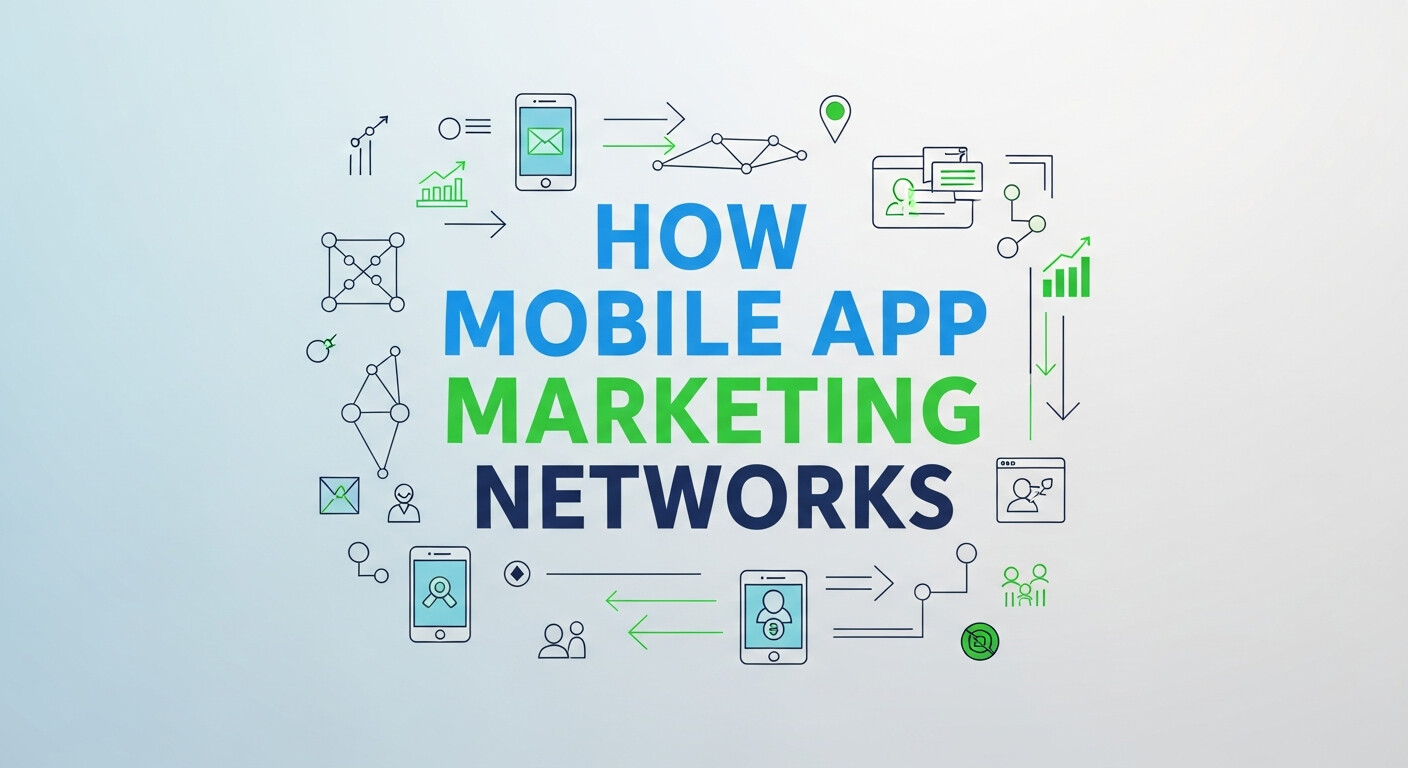
Mobile app marketing networks play a crucial role in improving app discoverability in crowded app stores. By distributing ads across multiple apps, websites, and platforms, these networks expose apps to users who may never find them organically. Advanced targeting options ensure ads reach users based on interests, behavior, device type, and location. This targeted exposure increases visibility among relevant audiences, leading to higher-quality installs. For new or lesser-known apps, marketing networks act as a discovery engine, helping them gain traction faster and compete with established apps in highly competitive categories.
Role of Targeting in Mobile App Marketing Networks
Targeting is one of the strongest advantages of mobile app marketing networks. Advertisers can define audiences based on demographics, interests, app usage behavior, geography, and even purchase intent. This precision reduces wasted ad spend and ensures campaigns reach users most likely to install and engage. Better targeting also improves retention rates because users are already aligned with the app’s purpose. Over time, data-driven marketing helps refine campaigns further, allowing marketers to optimize performance and improve lifetime value instead of focusing only on short-term installs.
Measuring Performance Across App Marketing Networks

Performance measurement is essential when using mobile app marketing networks. Key metrics such as cost per install (CPI), retention rate, lifetime value (LTV), and return on ad spend (ROAS) help evaluate campaign effectiveness. Many networks provide real-time dashboards that allow marketers to track performance and make quick adjustments. By continuously analyzing these metrics, developers can identify which networks, ad formats, or creatives drive the best results. Accurate measurement ensures budgets are allocated wisely and campaigns are scaled only when they demonstrate sustainable performance.
Importance of Creative Assets in App Marketing Campaigns
Creative assets significantly influence the success of mobile app marketing network campaigns. Eye-catching visuals, compelling videos, and clear value propositions capture user attention in seconds. Since users scroll quickly, creatives must communicate benefits instantly. Testing multiple creatives helps identify what resonates best with different audiences. High-quality creatives not only increase click-through rates but also attract users who are genuinely interested, leading to better retention. Consistently refreshing creatives prevents ad fatigue and maintains performance across long-term campaigns.
Balancing Install Volume and User Quality
A common mistake in app promotion is focusing only on install volume instead of user quality. Mobile app marketing networks make it easy to scale installs, but not all users provide long-term value. High-quality users engage, make purchases, and remain active over time. Developers should balance acquisition goals with retention metrics by choosing networks that prioritize intent-driven traffic. Optimizing for post-install events rather than installs alone helps ensure sustainable growth and better monetization outcomes.
Fraud Prevention in Mobile App Marketing Networks
Ad fraud is a growing concern in mobile app marketing networks. Fake installs, bots, and click injection can drain budgets without delivering real users. Reputable networks invest in fraud detection technologies such as machine learning, behavioral analysis, and third-party verification tools. Developers should monitor suspicious patterns like abnormal install spikes or low retention rates. Choosing trusted networks and tracking post-install behavior helps minimize fraud risks and ensures marketing budgets generate genuine, measurable results.
Scaling Campaigns Successfully Across Multiple Networks
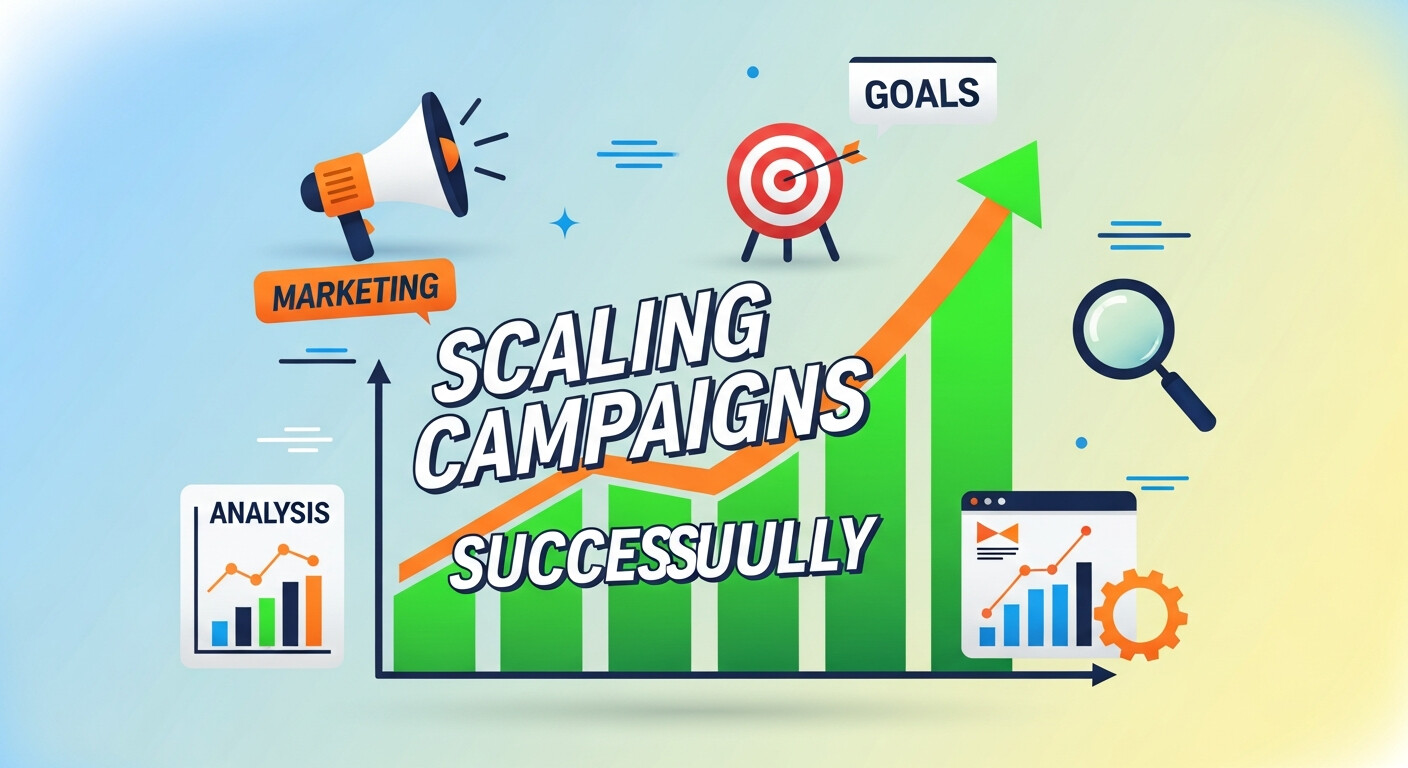
Scaling app campaigns requires careful planning and data analysis. Instead of increasing budgets instantly, marketers should gradually scale campaigns that demonstrate strong performance metrics. Mobile app marketing networks allow advertisers to expand reach by adding new geographies, audiences, or ad formats. However, scaling too fast can reduce efficiency. Successful scaling relies on consistent testing, performance monitoring, and creative optimization to maintain stable CPI and retention as campaigns grow.
The Role of Attribution in App Marketing Networks
Attribution helps marketers understand which mobile app marketing networks and channels drive installs and conversions. Attribution tools track the user journey from ad click to install and beyond. Accurate attribution prevents double-counting and ensures credit is given to the correct source. This insight helps marketers optimize spend and eliminate underperforming channels. Without proper attribution, decision-making becomes guesswork, leading to inefficient campaigns and wasted budgets.
Privacy Changes and Their Impact on App Marketing Networks
Privacy regulations and platform changes are reshaping mobile app marketing networks. Restrictions on user tracking require networks to rely more on contextual targeting and aggregated data. While this limits granular tracking, it encourages higher-quality targeting strategies focused on relevance rather than personal data. Networks that adapt quickly to privacy-first approaches will remain effective. Developers should stay informed and work with networks that prioritize compliance while still delivering strong performance.
Best Practices for Using Mobile App Marketing Networks
- Optimize Your App Store Page
Strong visuals, reviews, and descriptions matter. - Start Small with A/B Testing
Test different creatives, formats, and targeting before scaling. - Focus on Retention, Not Just Installs
Choose networks that attract users who stay. - Always be Optimizing
Constantly adjust based on performance and ROI.
Choosing the Right Network for Long-Term App Growth
Selecting the right mobile app marketing network is a strategic decision that impacts long-term growth. Developers should consider factors such as audience quality, transparency, reporting capabilities, and support. No single network fits all apps, so testing multiple options is essential. Long-term success comes from partnerships with networks that align with business goals, retention strategies, and monetization models. A thoughtful network selection process helps build a sustainable growth engine rather than short-lived acquisition spikes.
The Future of Mobile App Marketing Networks
Mobile app marketing networks are evolving with AI, privacy-first strategies, and immersive formats like AR. Stay informed, be adaptable, and take proactive steps now to stay ahead of the competition.
Frequently Asked Questions (FAQ)
What is a mobile app marketing network?
A mobile app marketing network is a platform that connects app developers with advertising spaces across apps, websites, and social platforms. Its main goal is to promote mobile apps by driving installs, engagement, or conversions using various ad formats such as banners, videos, interstitials, and native ads. These networks help developers reach the right audience efficiently and maximize return on investment.
Why are mobile app marketing networks important?
With millions of apps competing in app stores, organic discovery alone is rarely enough. Mobile app marketing networks provide structured distribution, precise targeting, and performance tracking, allowing developers to scale visibility quickly. They help apps stand out, acquire users faster, and compete effectively in crowded markets.
What is the difference between incentivized and non-incentivized networks?
Incentivized networks reward users for installing or engaging with an app, often resulting in fast install growth but lower long-term retention. Non-incentivized networks attract users without rewards, leading to fewer installs but higher-quality users who are more likely to stay engaged and convert over time.
Which type of app benefits most from social media ad networks?
Apps with strong visuals, interactive features, or content suited for younger audiences benefit most from social media ad networks. Platforms like Instagram, TikTok, and Snapchat allow immersive ad formats and precise targeting, making them ideal for lifestyle, gaming, fitness, and entertainment apps.
Are performance-based or affiliate networks cost-effective?
Yes, performance-based networks are cost-effective because advertisers pay only when a specific action occurs, such as an install, registration, or purchase. This model reduces wasted ad spend and is ideal for apps focused on measurable ROI, customer acquisition, and scalable growth.
How can developers choose the right mobile app marketing network?
Choosing the right network depends on app goals, target audience, budget, and retention strategy. Developers should test multiple networks, analyze performance metrics, and focus on user quality rather than just install volume. Starting with small campaigns and scaling based on data is the most effective approach.
Do mobile app marketing networks help with user retention?
While their primary role is user acquisition, the right network can significantly impact retention by attracting relevant users. Networks that prioritize targeting, user intent, and engagement tend to deliver users who stay longer and provide higher lifetime value.
What is the future of mobile app marketing networks?
The future is driven by AI-powered optimization, privacy-first targeting, and immersive ad formats like augmented reality and interactive video. As tracking becomes more restricted, networks will rely more on contextual data, machine learning, and creative innovation to maintain performance and relevance.


App Store Optimization Tips for Improving App Visibility and Downloads


AI-Powered App Marketing: Boost Acquisition & Retention

Supercharge App Growth with AI-Powered Chatbots